
[ad_1]
When asked to describe the average art investor, most people will skew towards old, wealthy, and conservative. And for the most part, they’d be right: art collection is a pursuit that can take decades to master, particularly when approached from an investment perspective, which demands serious capital in order to acquire works by known artists.
But there’s a new investor class emerging that’s enamored with art for its ability to serve as an uncorrelated asset and generate significant returns for shrewd buyers. This group tends to be younger and less wealthy than traditional art collectors, yet its penchant for works by contemporary and classical artists is every bit as strong. Their secret to affording million-dollar works? Purchase just pieces of them, one shard at a time. The fractional art market is in rude health as participants prove there’s more than one way to divide a painting.
Investors Seek Splinters of Fine Art
The next best thing to owning a masterpiece is owning a piece of one. That’s the message emanating from the fractional art industry, where different approaches to dividing paintings old and new are yielding dividends. Fractionalizing art doesn’t just increase the investor set that can afford to speculate, but it increases liquidity for a traditionally illiquid asset class, particularly when those fractions can be traded onchain.
For collectors intrigued by the concept of fractional art, but hesitant to stray too far from traditional investments, Masterworks is a well-reputed provider. It now has more than $800M AUM, and boasts works by the likes of Banksy, Warhol, and Cecily Brown. With blue chip art outperforming almost every other asset class in recent years, the appeal is obvious. According to the company, its investors have enjoyed annualized returns of 13-32% on high performing contemporary works, which are typically held for three or more years before being sold for a profit.
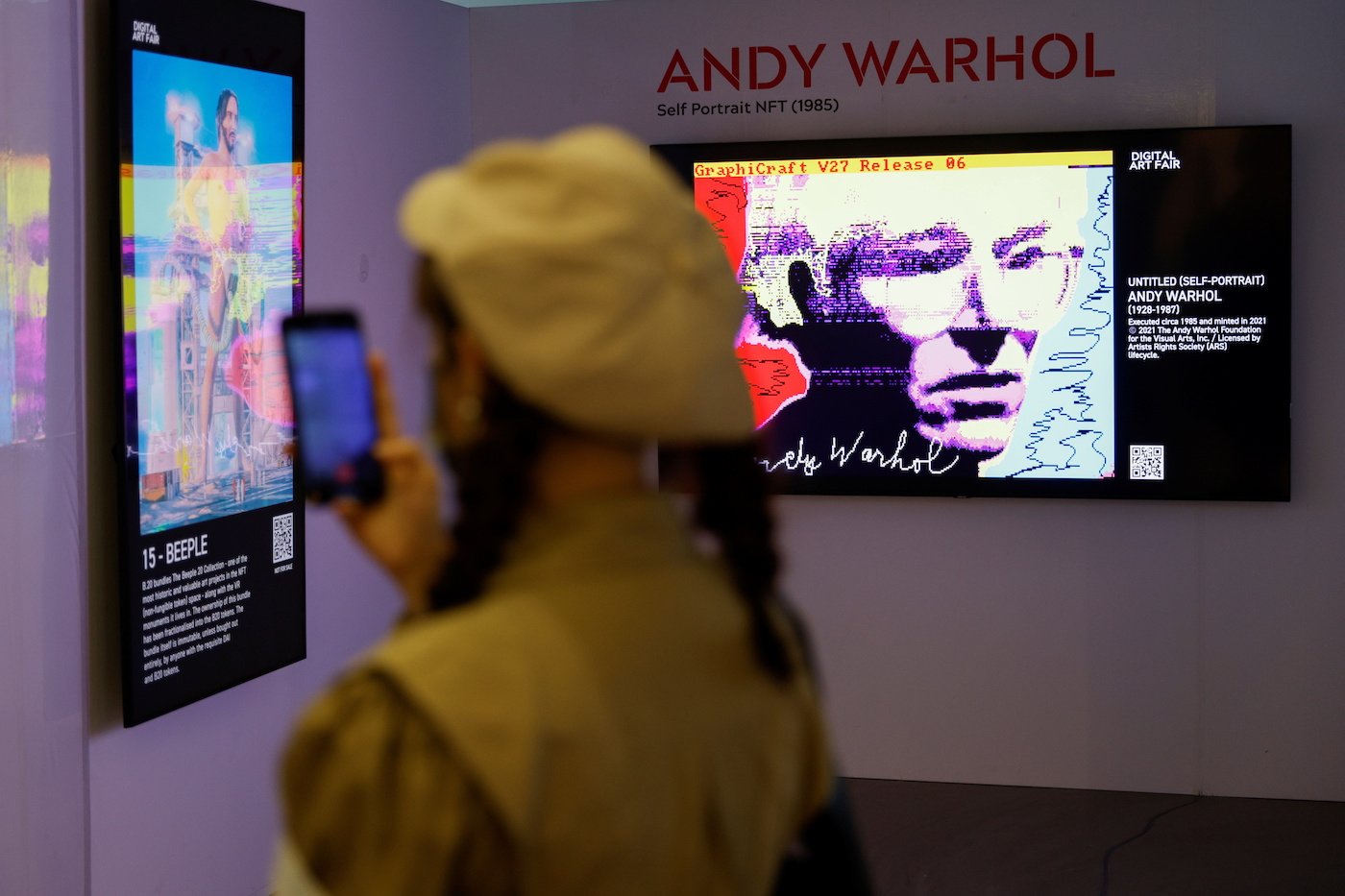
Onchain, meanwhile, art is being fractionalized in a number of creative ways, allowing buyers to trade it in tokenized form. The ability to liquidate a piece of art whenever required is as novel as it is useful for token-holders. Artfi is leading the drive to fractionalize art in a blockchain context, and is leveraging NFTs to facilitate this. Its latest venture has seen renowned artist Sacha Jafri release a fractionalized digital art collection on Artfi derived from paintings of Rolls Royce cars. “The Six Elements” provides further proof of the innovation that demand for fractional art is driving.
Separating Hype From Reality
In April, ArtTactic published a report that found 9% of collectors surveyed have purchased fractional art shares, and 61% claiming they would probably do so in the next 12 months. There appear to be a number of reasons driving the growth of the fractional art market. One of these is the expectation of profit. While there are no certainties when investing in art, blue chip works by contemporary artists have outperformed equities this century.
Not only has collectible art proven to be a good store of value, but in many cases, it’s increased its value in under three years, netting a handsome profit for its owners. While no market can go up indefinitely, art, both from the Old Masters and their 20th century counterparts, has proven remarkably robust. And this has been despite the market being inaccessible to the majority of investors prior to the emergence of fractionalization.
While US and European investors have a penchant for contemporary works by known artists, other regions are taking fractional art in other directions. In Nigeria, ARTSPLIT is offering shares in African art, and in South Korea, millennials are getting in on the act, purchasing shares in paintings by Asian artists for just a few dollars apiece. In Europe, meanwhile, Liechtenstein’s Artex Group is hosting IPOs to purchase classic masterpieces worth over $50M. Buyers can get involved for around $100 a share.
As the fractional market evolves, it will be intriguing to see whether it can help further raise the profile and price of works old and new. While the amount of art available for collection is essentially infinite, the number of pieces collectors are willing to pay top dollar for is finite. With a young, wealthy, and digitally native generation of collectors emerging, the fractional market is just getting started.
The views and opinions expressed herein are the views and opinions of the author and do not necessarily reflect those of Nasdaq, Inc.
[ad_2]
Source link