
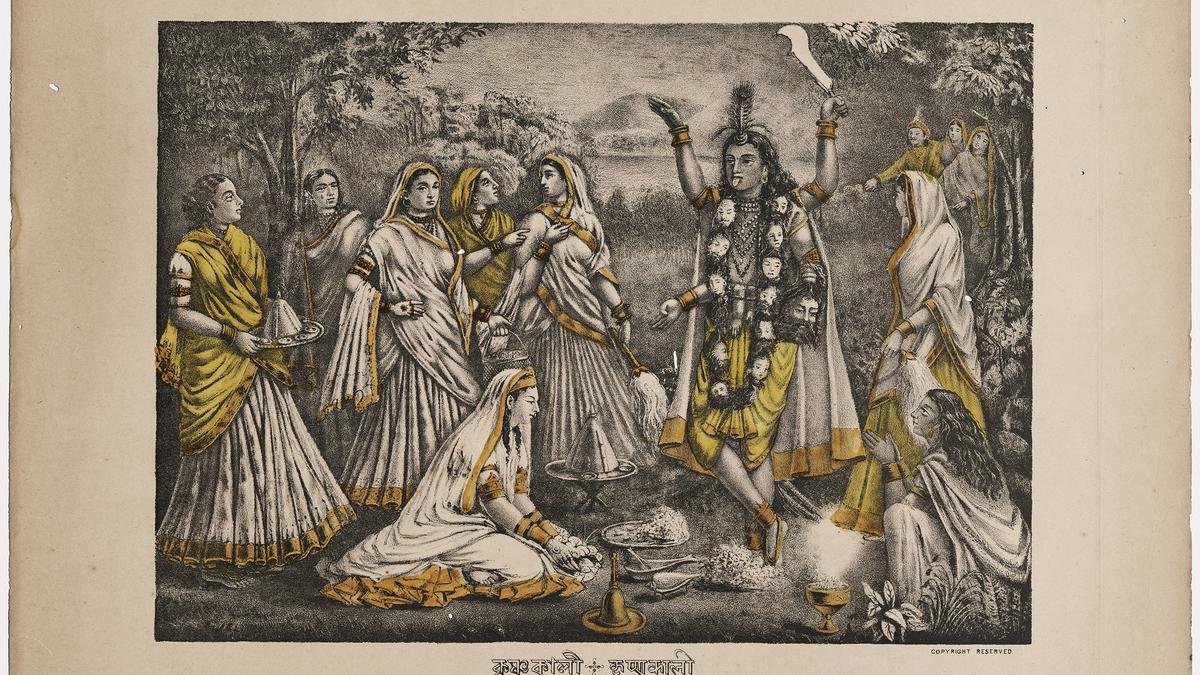
[ad_1]
Swadeshi nationalism, Bengali devotion and tobacco form an unlikely triad.
Yet I encounter all three on a chilly Boston morning, on a poster that would almost certainly be deemed anti-national by today’s hypersensitive standards.
Bengalis of the early 20th Century certainly knew how to capture an audience.
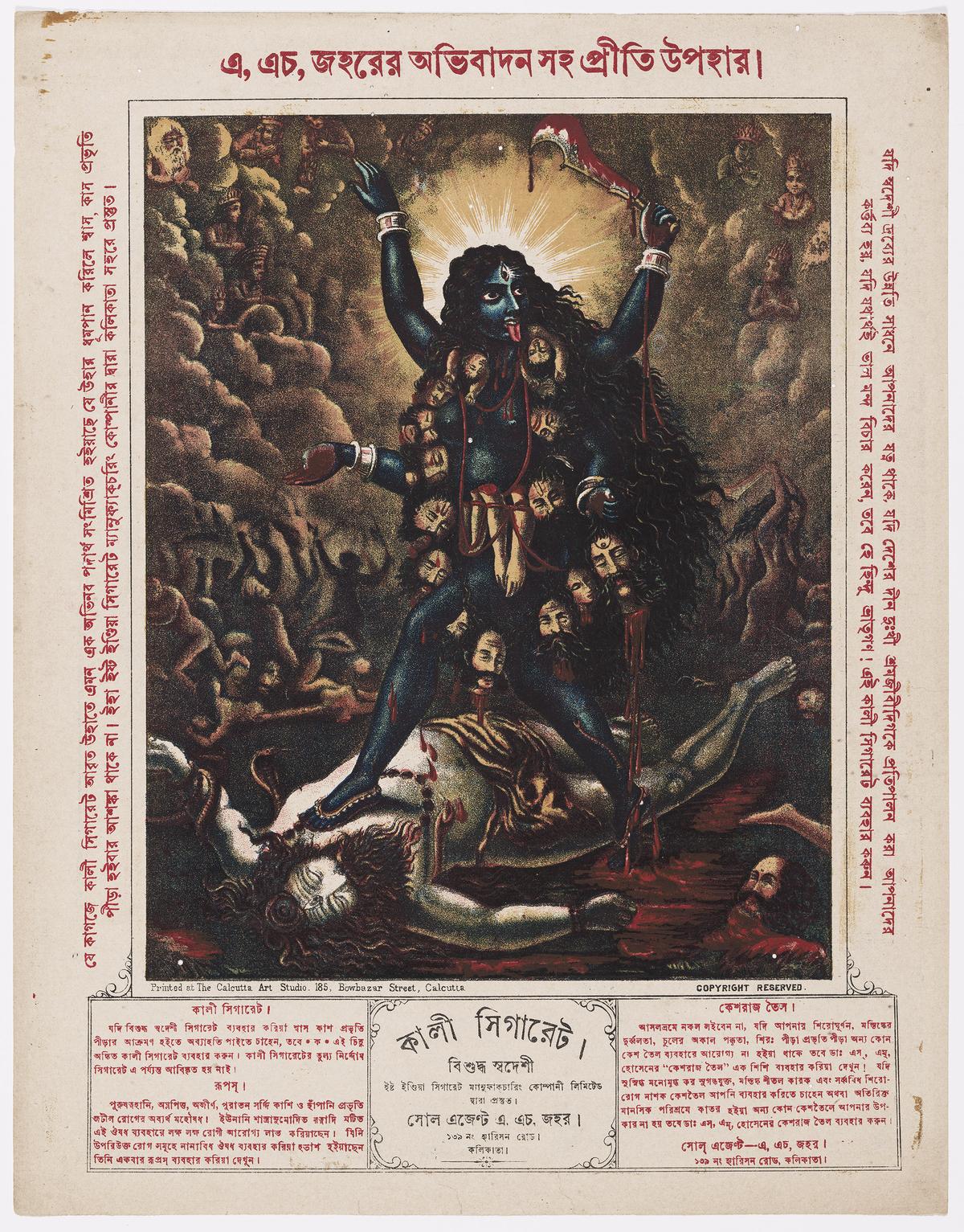
Kali
Calcutta Art Studio
About 1890–1900
Lithograph
| Photo Credit:
Marshall H. Gould Fund; Photograph © Museum of Fine Arts, Boston
At the Museum of Fine Arts, Boston, this vivid poster of Kali is surrounded by carnage and delicately rendered text in blood red. Along the sides, it praises the Goddess as a protector, urging devotees to worship her image for courage. Below, there is an advertisement for Kali cigarettes, proudly declared to be ‘pure Swadeshi.’ (And, in the misplaced optimism typical of the period, also “trusted, reliable and safe to smoke”.)
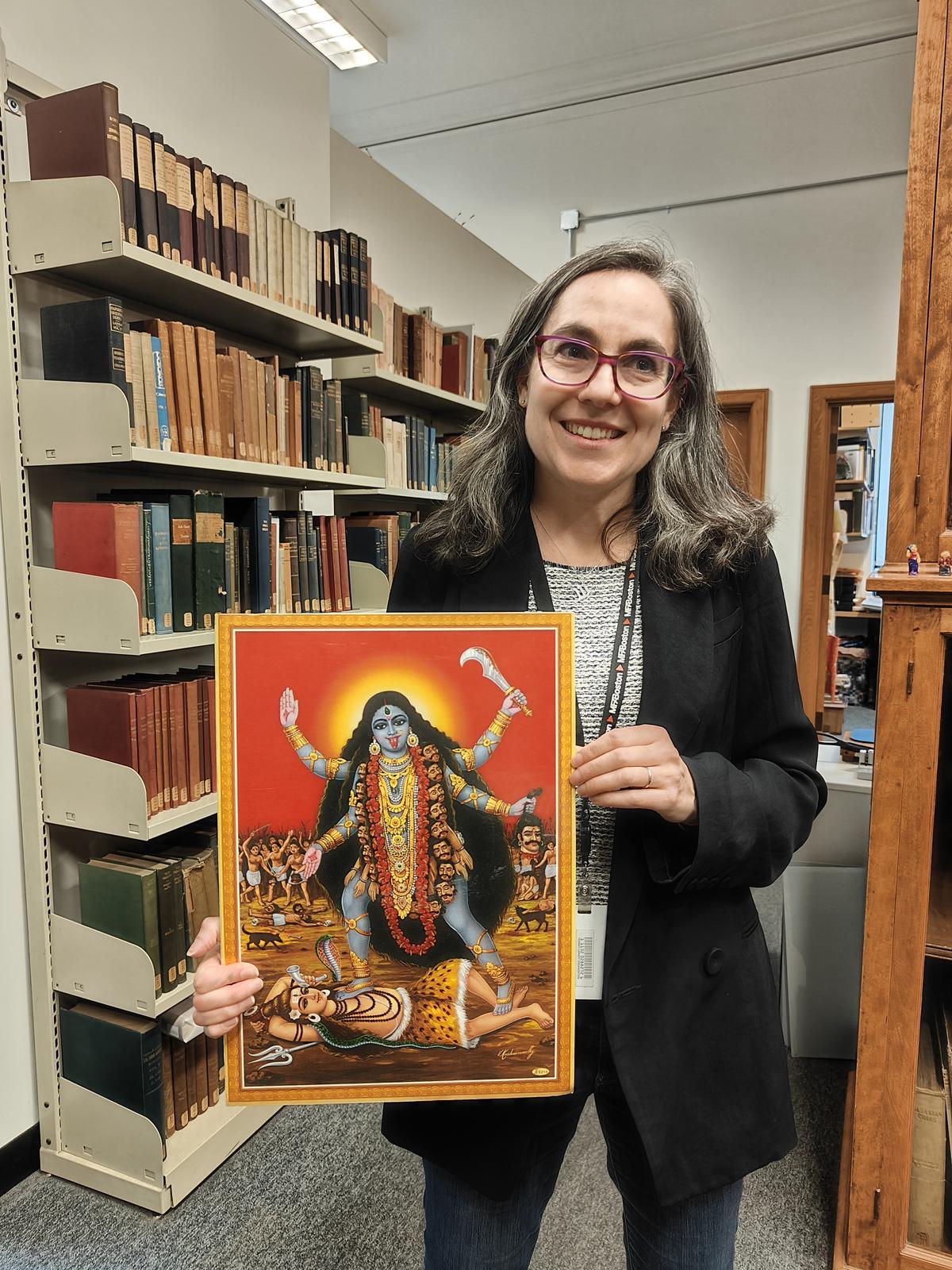
Laura Weinstein poses with a poster of Goddess Kali
| Photo Credit:
Special arrangement
At the very bottom, a printers note lists the maker: Calcutta Art Studio, 185 Bowbazar Street.
This is where curator Laura Weinstein comes in. “We put this together to make people think about where popular art from around the world comes from. And how it is connected to literature, street theatre and local art forms,” she says, as she walks us through bright historic prints, all lined up for the museum’s latest exhibition, Divine Color: Hindu prints from Modern Bengal.
It brings together about 40 of these rare prints, painstakingly collected from all over the world over almost 15 years. Once overlooked by serious art collectors, museums now value these prints. Despite being mass produced, they required considerable skill. Also, rather than being passive art, they were created to be accessible, to be hung in homes and puja rooms, shaping history and people’s lives.
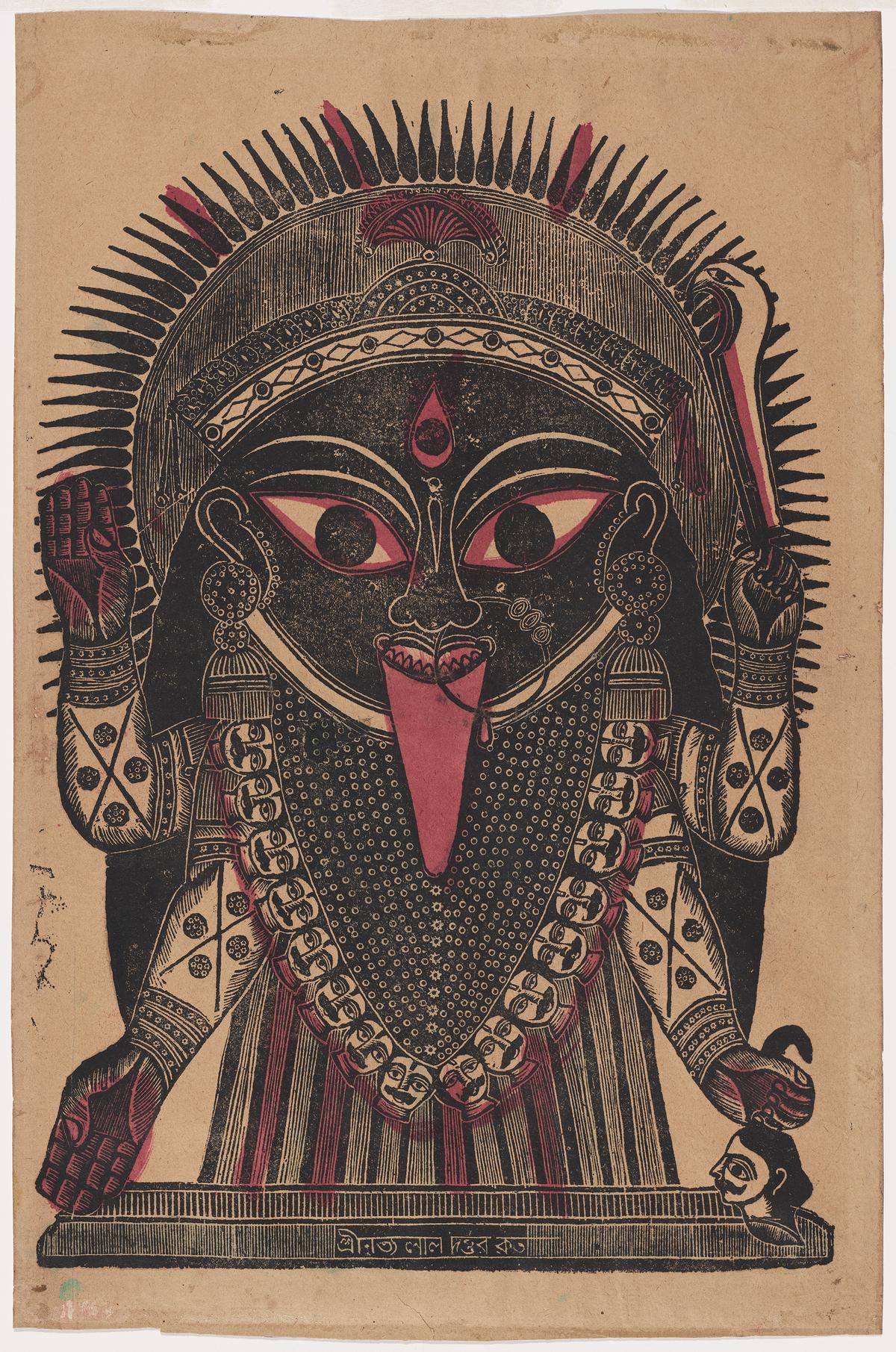
Kali
Nritya Lal Datta (Indian)
About 1850–1880
Relief print, hand painted
| Photo Credit:
Private Collection, New York; Courtesy Museum of Fine Arts, Boston
Today, they are getting the museum display they deserve. And while this show is the first of its kind in the US, focussing on works by Bengali artists from 19th-Century Calcutta (now Kolkata), it is likely to spark interest in a whole new wave of collectors.
Divine Colour includes paintings, sculpture, and textiles from the museum’s South Asian collection as well as select loans, totalling about 100 objects.
Laura, who is the Ananda Coomaraswamy Curator of South Asian and Islamic Art for the museum, says “We are considered to have one of the best collections of Asian art in the world”. The museum started collecting Indian art in 1917, thanks to Ananda Coomaraswamy, who was a Sri Lankan-British art historian. “He was in Sri Lanka in the early 1900s, where he collected bronzes. He came here with his collection, and worked with the museum for the last three decades of his life,” Laura adds.
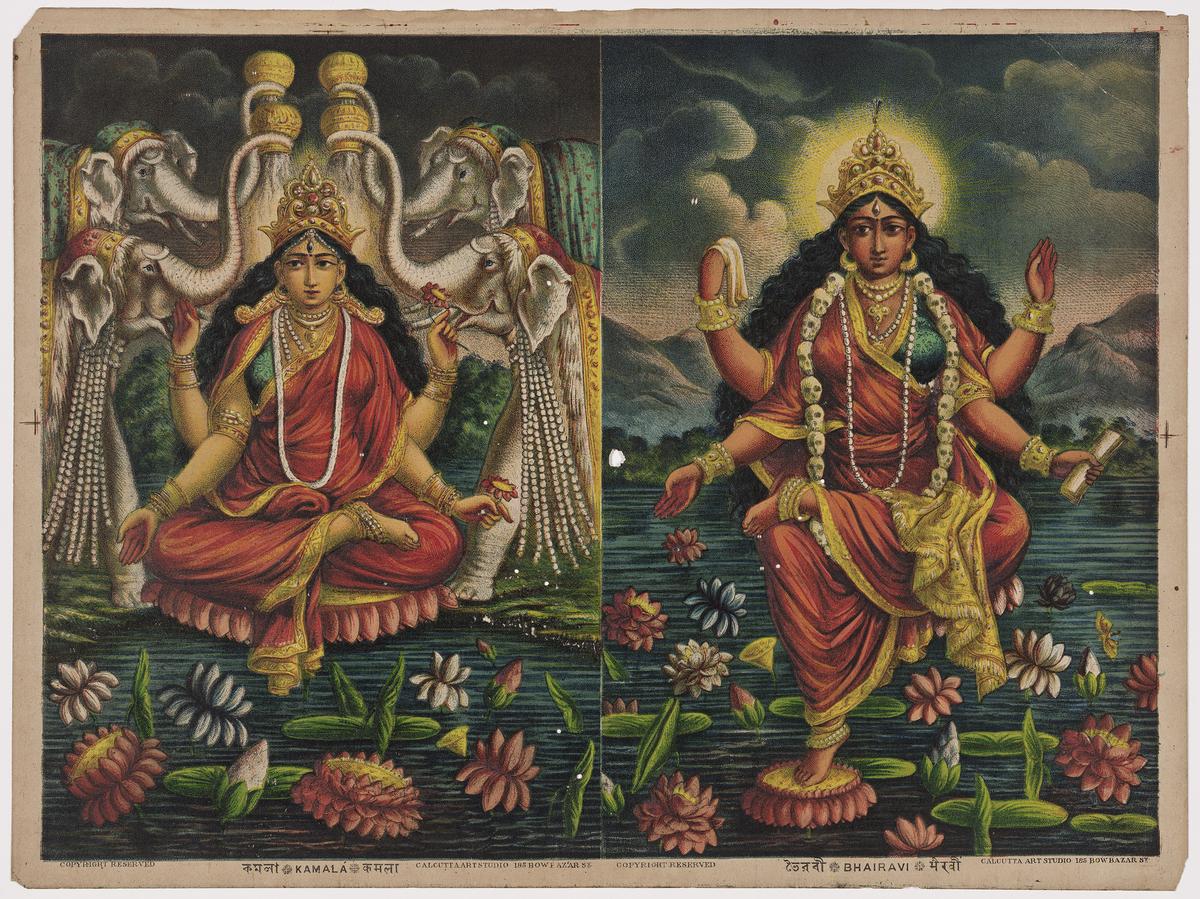
Kamala/Bhairavi
Calcutta Art Studio
About 1885–95
Lithograph
| Photo Credit:
Marshall H. Gould Fund; Photograph © Museum of Fine Arts, Boston
Her interest in Indian art was fuelled by growing up in New Jersey, “where we have the largest Indian diaspora in America”. Inspired by her Indian classmates and friends, she spent a semester in Jaipur, then travelled to Varanasi.
Explaining the significance of Divine Color, Laura gives us a class on lithography, which was invented in the late 18th Century and reached India along with the Europeans who used it for maps, lists and census data. “By the 1850s, Bengali artists started using lithography presses to make books for their own use. Then came the portraits of political figures. When the Kalighat artists learnt the skill, they realised there was a huge market for pictures of Hindu gods. It was a faster and cheaper process than painting. They started creating pilgrimage souvenirs. It also became a way to communicate political satire.”
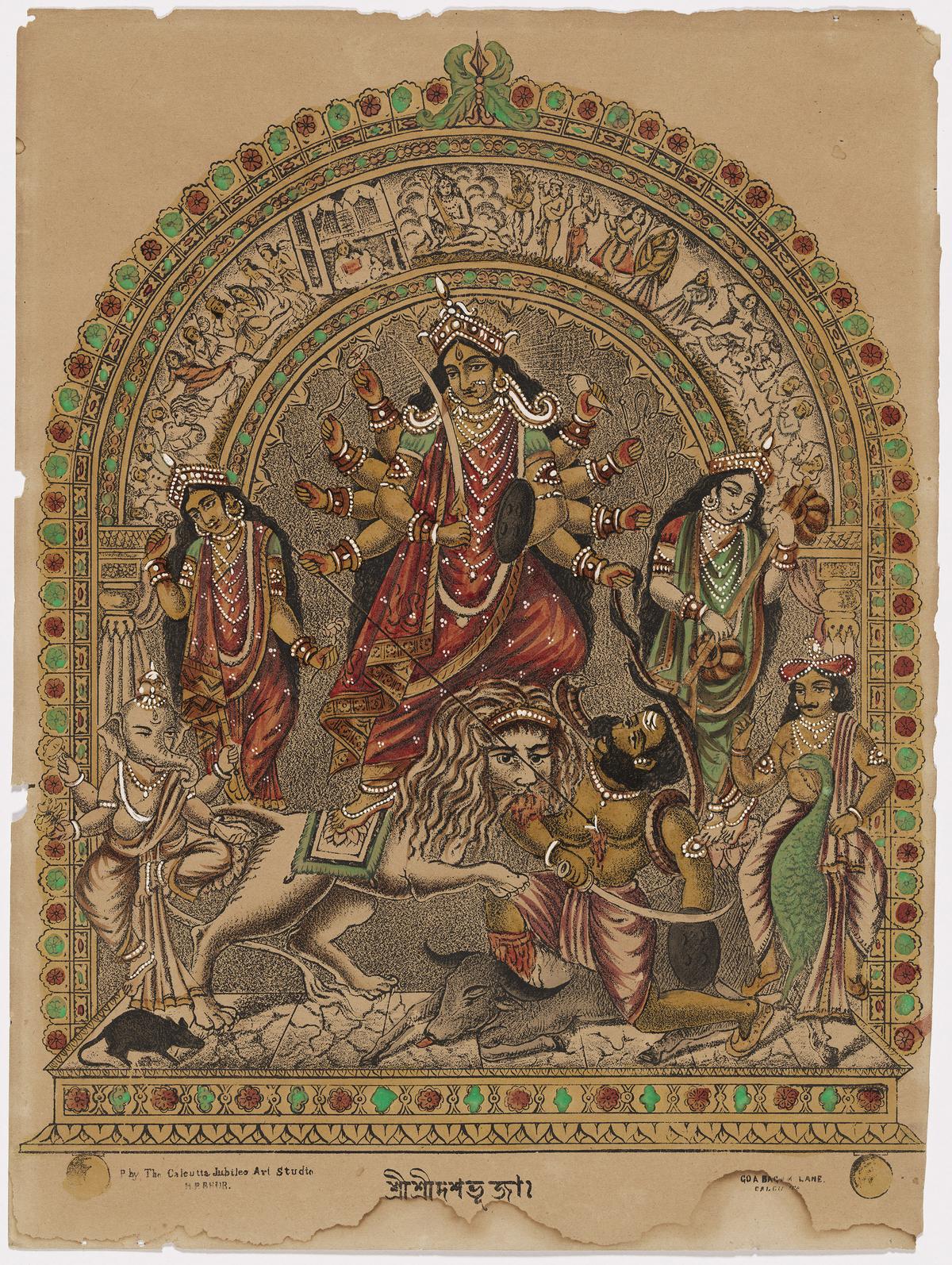
Shri Shri Dashabhuja
Calcutta Jubilee Art Studio, H.P. Bhur (Indian)
About 1880–1885
Lithograph, hand painted with watercolour
| Photo Credit:
Frank B. Bemis Fund, Elizabeth M. and John F. Paramino Fund in memory of John F. Paramino, Boston Sculptor, and Edwin E. Jack Fund; Photograph © Museum of Fine Arts, Boston
Calcutta Art Studio, established in 1878, was the most famous of these Indian printing presses and it created iconic, mass produced lithographs of Hindu deities. As she holds up the Kali poster, Laura explains how their “Krishna Kali” prints were influenced by European realism. Now sought after collectors’ items, they were printed in ink, and then hand-painted.
Although they are getting increasingly tough to find, Laura says, “A lot of these posters survive in Bangalore. A lot in Shekavati, Rajasthan, where they were used by Marvari families.” The museum’s collection started in 2011, sourced from art dealers and American yoga studios (which often bought them for display). She adds, “Today we have 75 prints, but in the last 15 years, Indian collectors have also got interested in print. So we probably will not add anymore.”
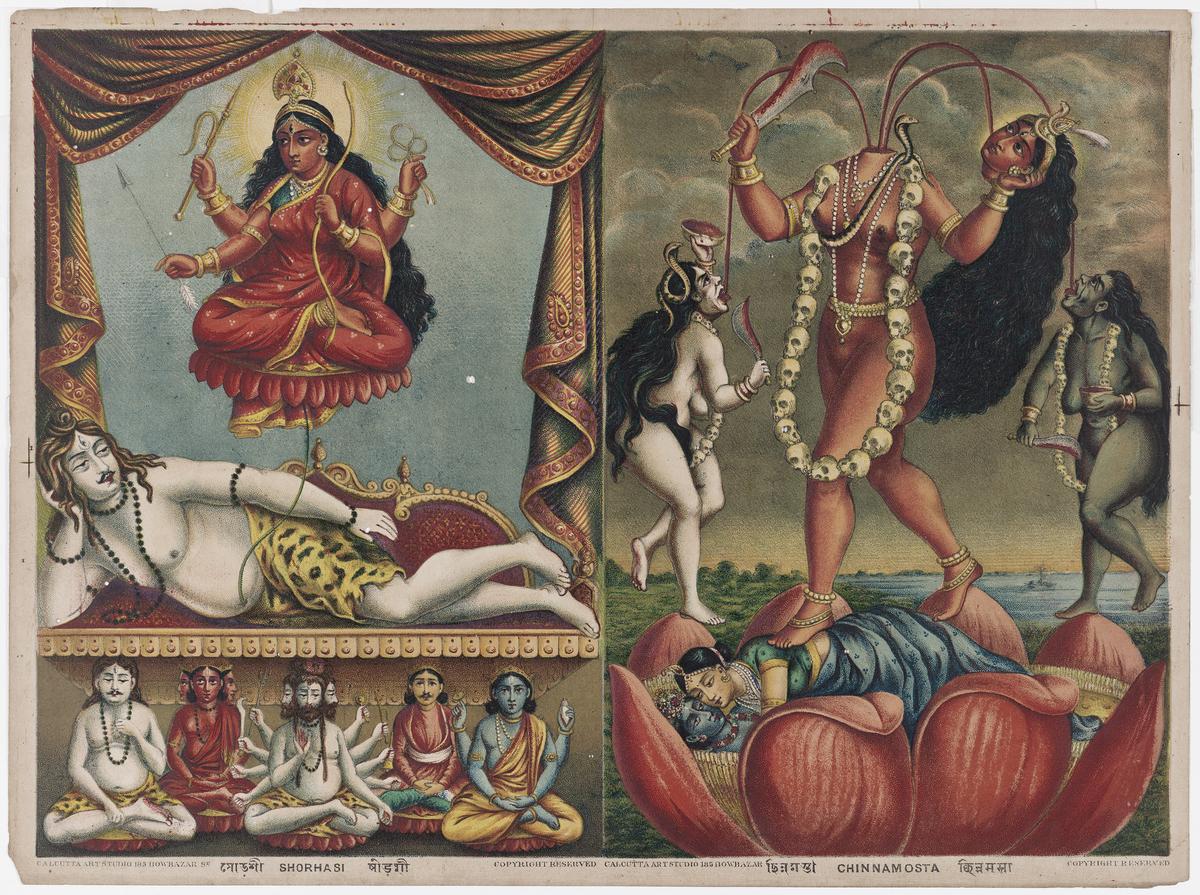
Shorhasi/Chinnamosta
Calcutta Art Studio
about 1885–95
Lithograph
| Photo Credit:
Gift of Mark Baron and Elise Boisanté; Photograph © Museum of Fine Arts, Boston
Intrigued by the Kali poster, I go on a hunt for Calcutta Art Studio online, and find out that it still exists. Still on Bowbazar road. Still printing. Still revelling in its past glory. Only now, it boasts “packaging materials, offset machine spare parts and advice on press layout from its “stupendously experienced team.”
It is impressive — and entirely in character — that the company continues to future-proof itself in Kolkata. It is just as fitting that, in Boston, its past is being safeguarded and celebrated with a new audience.
Divine Color: Hindu Prints from Modern Bengal is on view until May 31, 2026, at the Lois B. and Michael K. Torf Gallery at the Museum of Fine Arts, Boston. Entry is included with general admission.
Published – February 04, 2026 06:03 pm IST
[ad_2]
Source link