
[ad_1]
Artist Willem de Kooning held his first solo exhibition at Charles Egan Gallery in spring 1948, just shy of his 44th birthday. A smash success, the exhibition made his reputation, repositioning the artist and catapulting him to international renown by the early 1950s. By the decade’s end, many would consider him the world’s pre-eminent painter.
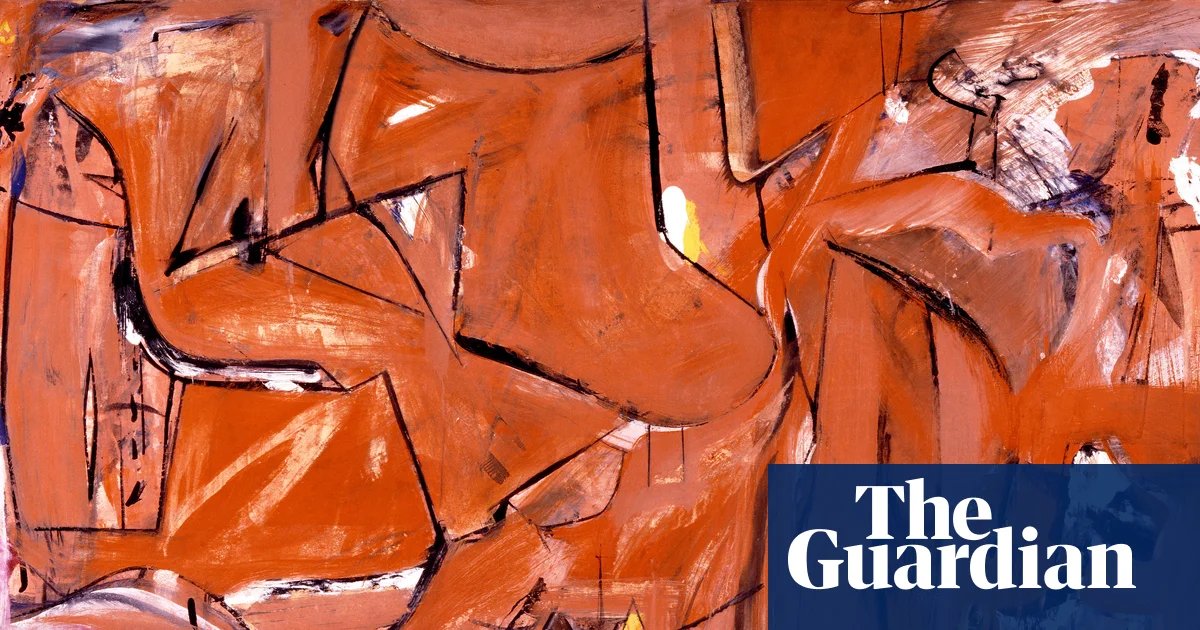
Princeton University Art Museum now offers a kind of revisiting of de Kooning’s transformative star-making show with Willem de Kooning: The Breakthrough Years, covering 1945-50. Featuring 18 paintings that reveal an artist feeling his way between figuration and abstraction, it shows de Kooning finding his own unique relationship with both styles. Although The Breakthrough Years does not feature the exact lineup of paintings from the Egan show, it does take audiences intimately into the artist’s creative life from that period.
“He wanted to wait until he really had a body of work that he felt good about,” said de Kooning expert and show co-curator John Elderfield, explaining why the painter waited so long to have his first solo show. “He came up with an exhibition that had about a dozen works.”
At the time, de Kooning had developed something of an underground reputation, highly esteemed by those in the know but not yet widely admired. The highly influential essayist and art critic Clement Greenberg helped break him out of that status with a review of the Egan Gallery show that made many more eyes turn towards him.
The Breakthrough Years offers a concentrated look at many of the signature works from this particularly fertile period in de Kooning’s career, giving audiences an opportunity to see such key pieces as Black Friday and Dark Pond. The show’s palette is notably restricted, with blacks and tans predominating amid occasional washes of color, such as the electric yellow in Secretary and the beguiling ocher in Gansevoort Street. The artist’s sinuous lines dance around the canvases in controlled ecstasies, and his exacting use of shading makes many of these works absolute feasts of negative space.
“There is something about him reducing his means and working without chromatic color, which really gives these paintings a kind of intensity,” said Elderfield. “He’s using black as a color, which makes these paintings seem extraordinarily vivid and very present.”
The mid- to late 1940s were a period where de Kooning worked stridently to build his art, emerging as a leader of the New York school. “What happened in the 40s was absolutely transformative in his career,” said Elderfield. “He becomes an absolutely mature artist in that five-year period.”
That decade saw the first museum purchase of one of his paintings; a piece simply titled Painting, acquired by MoMA in 1948, is among the works featured in The Breakthrough Years. This was also a period when de Kooning was developing a kind of rivalry with his abstract expressionist counterpart, Jackson Pollock. “Part of his development as an artist was intertwined with the fact that Pollock was making waves at the time,” said Elderfield. “Some of his works after the Egan exhibition seem to be in competition with Pollock.”
For all of de Kooning’s raw talent as a creative force, he wasn’t particularly savvy about marketing himself and developing his artistic career. His wife, Elaine, an artist in her own right, often acted as her husband’s informal publicist, spearheading the Charles Egan show and helping de Kooning take steps to bring himself the acclaim that his art deserved. “His wife was realizing that other artists were getting a lot of coverage because they were having shows, so she pushed him to have a show,” said Elderfield. “I think de Kooning felt like he didn’t really have a whole group of paintings together and he was being pushed along by her.”
Elaine also helped de Kooning with a task that he had little interest in: finding titles for his paintings. Along with other supporters from the Egan gallery, Elaine participated in naming sessions where they gave the works titles. “They’re all sitting in the galleries, drinking, having a good time, and they say: ‘What are we going to call these?’’’ said Elderfield. “It’s just names they thought that people would remember them by.” According to Elderfield, de Kooning cared so little about the titles of his works that it sometimes happened that a person who acquired a work would be the one to title it. “In one case someone bought a work and named it, and de Kooning didn’t seem bothered by it,” he said.
From the 1950s onward, de Kooning would continually reinvent himself, famously moving back into figuration with his so-called woman paintings. The move was typical of the artist, who retained a maverick, anti-conformity sensibility throughout his lifetime. The decision certainly didn’t go over so well with everyone. De Kooning’s longtime rival Pollock deemed him a traitor for the move. “Pollock said: ‘You’ve betrayed the cause by making figurative paintings again,’” Elderfield said.
The woman paintings did, however, resonate with Bob Dylan, whom Elderfield personally escorted through the MoMA’s monster 2011 de Kooning show, a show that he himself organized. “Bob Dylan said he wanted to go through the show with me, and he remarked how de Kooning’s style kept changing all the time,” Elderfield said. “When we got to the woman paintings, he told me: ‘This is when de Kooning went electric.’”
De Kooning has continued to resonate to the present day, with his works setting records for the prices they fetch. In 2015, his work Interchange made headlines when its sale for $300m set a record at the time for the highest price for a painting. According to Elderfield, the paintings that garner such stratospheric prices are quite flashier than the ones shown at The Breakthrough Years. “The ones that are bravura paintings are the ones that seem to attract people most,” he said. “Collectors like to have works where people come into their home and say: ‘Oh, look at the de Kooning!’ but they probably won’t say it about these works.”
The paintings also continue to resonate with other artists, with sculptor Richard Serra among those who have been inspired by the paintings shown in The Breakthrough Years. In the end, working with de Kooning is an embarrassment of riches. “Trying to do a selection of de Kooning’s work is like picking clouds from the sky,” said Elderfield. “There’s too many of them.” The 18 paintings on show at Princeton certainly show why.
[ad_2]
Source link