
[ad_1]
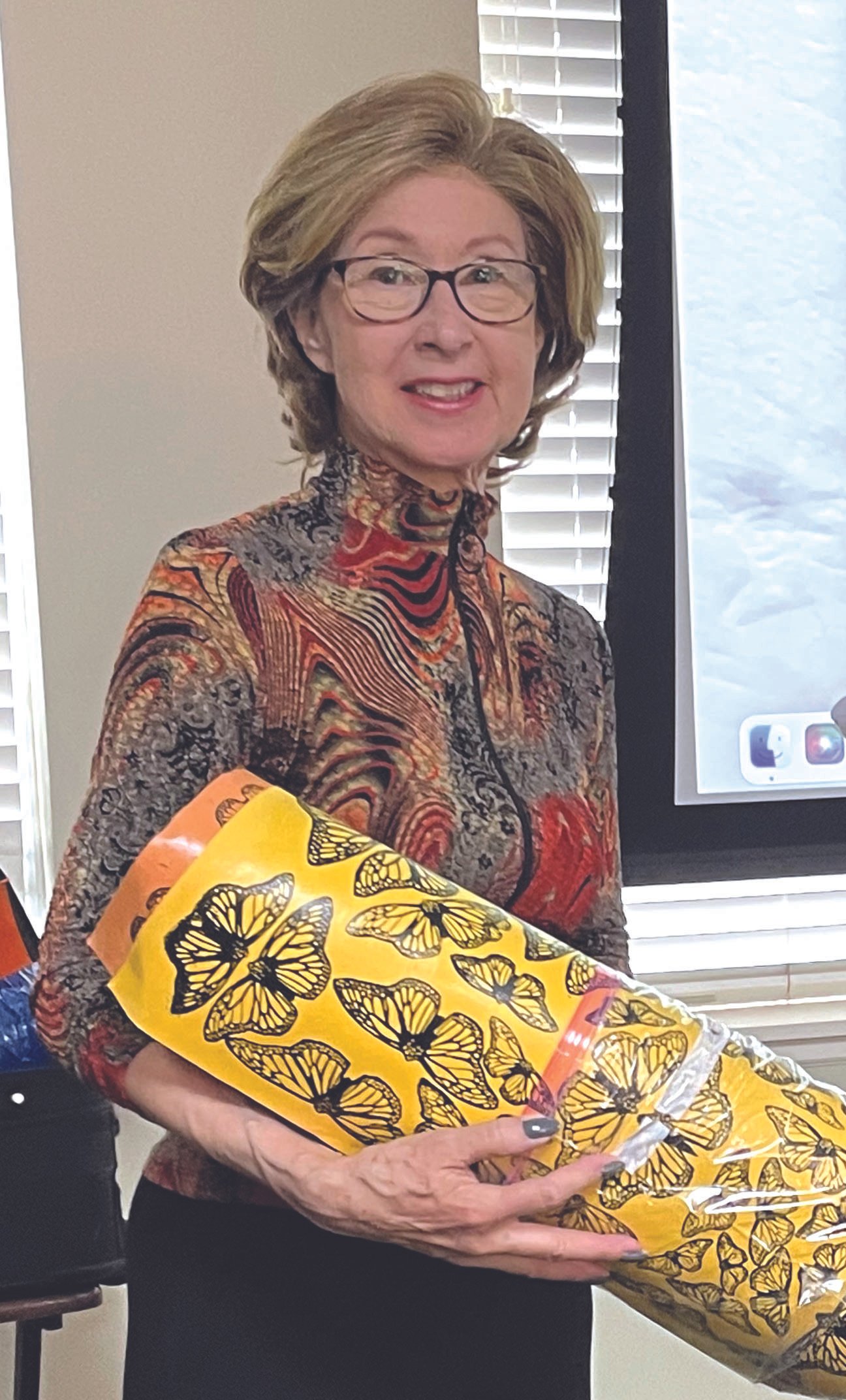
Anne Dushanko Dobek is a multidisciplinary conceptual artist who focuses on issues of social justice and the environment.
She recently paid a visit to Winchester Gardens in Maplewood to give a visual presentation “Artist in the Rainforest” about her work with scientists in the rainforests of Costa Rica.
Dobek, who resides in New Providence, spoke about growing up in West Berlin, N.J. and the importance of pollinators.
“Growing up in New Jersey, it was still the Garden State. We didn’t have pesticides,” she said. “You had bees and butterflies. As a child I lived in rural New Jersey. I was the oldest of five children. We didn’t have anything to do but play in the forest.”
Continuing, she said, “Pollinators are an important part of life on earth, providing products to support the food system. Most crops depend on pollinators.”
She further explained that the decline of bees and butterflies is almost a crisis. And that in the 1990s California had 4.5 million butterflies. Just a few years ago, that number dwindled down to 4,000.
“The ecosystem is at stake,” she said. “We need to look at our lives and think, ‘What are we doing?’ Every caterpillar is either a baby moth or baby butterfly. Remember, it has a second life.”
Dobek talked about her time in the|rain forests of Costa Rica.

“If you step lightly and speak softly you see the most amazing animals.” She showed slides of a red frog and a tree sloth. “It’s a good idea not to wear sandals in a rain forest, inviting a bite,” she said.
She explained that red flowers attract pollinators. The color red tells a caterpillar it’s a flower, not food.
“Vividness of colors means plants will be pollinated,” she said. “Honeybees fly around and pollinate plants.”
Dobek spoke about the Caligo butterfly, which are known for their eye spots. “The eye is deceiving to other animals, so they leave them alone.”
As a rain forest artist in Costa Rica, Dobek’s job was to photograph butterflies and caterpillars. She talked about the “fast freeze” process used so butterflies are moist. Then they are carefully spread and held in place with rice paper. When dried, they could be photographed more easily.
“I always have a sketchbook,” said Dobek. Fascinated by Japanese haiku, Dobek placed it with random drawings from Costa Rica.
Her adventures were supported in part by the Geraldine Dodge Foundation and Earthwatch Foundation.
The presentation was the first of a three-part series on pollinators. The next few days at Winchester Gardens were spent with residents joining Dobek to create paper butterflies and then put them into a larger installation.


[ad_2]
Source link