
[ad_1]
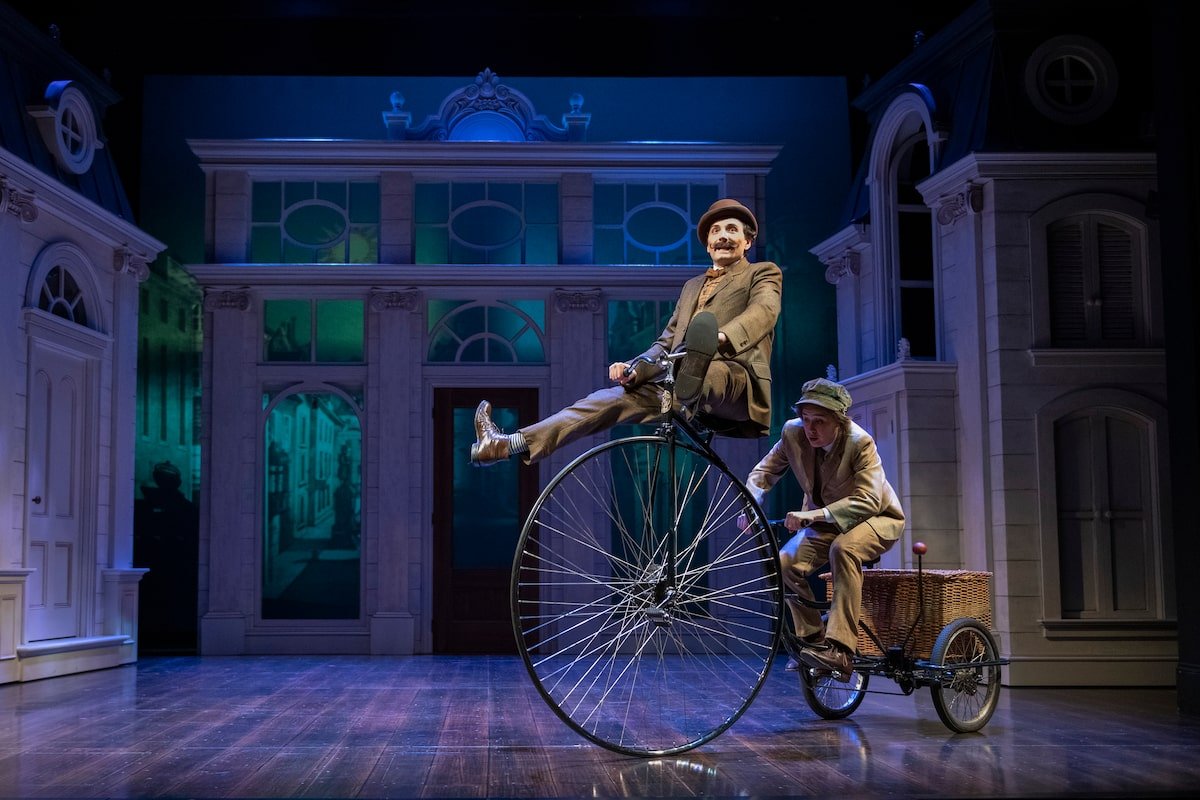
Mike Nadajewski as Weinberl and Kristi Frank as Christopher in On the Razzle, part of the 2023 Shaw Festival.Emily Cooper/Shaw Festival
Tim Jennings is the executive director and chief executive officer of the Shaw Festival.
As a country, we are still recovering.
According to the Parliamentary Budget Officer’s most recent Economic and Fiscal Outlook, “sluggish growth” will continue to define Canada’s economy this year.
The arts, culture and tourism sectors are no exception. As one example, despite bringing in record fundraising dollars and its highest gross revenues last year, the Shaw Festival reported the largest deficit in its history, owing to cost escalations and the failure of attendance to regain historic norms. And it is far from the only festival facing this financial reality.
But the issues facing our economy, while complex, are not insurmountable. We do, however, need to think differently about how we tackle them.
Historically, investments in the arts and culture sectors have been missing from our long-term growth strategies. The arts are often seen as a “nice to have” in policy making, rather than cornerstones of Canadian thought and development, and seldom as the major economic drivers they are.
In its latest outlook, Destination Canada projected that growth in the tourism sector will outpace the overall economy. The Ontario Arts Council also recently published a report showing arts and culture tourists spend three times more than other tourists, helping generate more jobs, growth and investment in local economies.
As one example, for every dollar spent at the Shaw Festival Theatre, in Niagara, Ont., more than seven dollars of additional spending by our patrons is added at local restaurants, wineries and attractions, with a significant percentage – more than a third – coming from U.S. patrons. This results in more than $240-million per year in additive economic activity in the region, a massive amount for any business, and particularly noteworthy for a charity.
In a recent analysis by PwC, an expansion of the Shaw Festival’s capacity and infrastructure could produce an additional half a billion dollars in new economic value to the region over the coming decade and yield a remarkable 15-to-1 return on investment, as well as save Canadians twice that in social and health benefits generated through its programs.
But the Shaw is far from alone in yielding such remarkable returns for local economies. Cultural attractions across the country draw millions of visitors from Canada and abroad each year and inject hundreds of millions of dollars into host cities through associated spending on food, accommodations, travel, attractions and retail.
Indeed, prior to the pandemic, every $1 of provincial funding invested through Celebrate Ontario resulted in almost $21 of visitor spending. The impact of the Ontario government’s 2021-22 Celebrate Ontario Blockbuster and Reconnect funding is estimated to have generated over $1-billion in economic benefit across the province.
Conversely, the disappearance of cultural attractions is devastating, not only for local communities but also our broader economy. It is sadly an impact not fully appreciated until it’s gone. The cancellation of the Just For Laughs Festival in Montreal this year, after more than 40 years, is a stark example. The two-week-long festival contributed roughly $34-million annually to Quebec’s GDP, the equivalent of more than 500 full-time jobs.
Compare that to the business case for something like the Ontario Line, which estimates that for every dollar spent on the project, only $1.05 in benefit will be generated. Or the uncertain return on investment for the Government of Canada with its $35-billion buyout of the Trans Mountain pipeline.
This is not to dismiss the broader economic and community benefits of these projects. Indeed, I might call them important and necessary investments. But it does bring into stark relief that a dollar invested in cultural infrastructure simply goes much further than in most other sectors.
It is not only because these organizations are mostly purpose-driven non-profits and charities that have historically had to do more with less, but also because they have a long track record of bringing the right players together – from private donors to businesses, other non-profits and the broader community.
With business and community leaders at the table, the key player still missing is government.
As we continue to face economic uncertainties, we need our federal, provincial and regional governments to recognize cultural infrastructure as a necessary booster of productivity and growth, in an ongoing way, and not an unnecessary expense. One that will bring significant private partnerships to bear for the good of the communities they serve. Investing in cultural projects now will unlock a more prosperous and enlightened future for Canada and for us all.
[ad_2]
Source link