
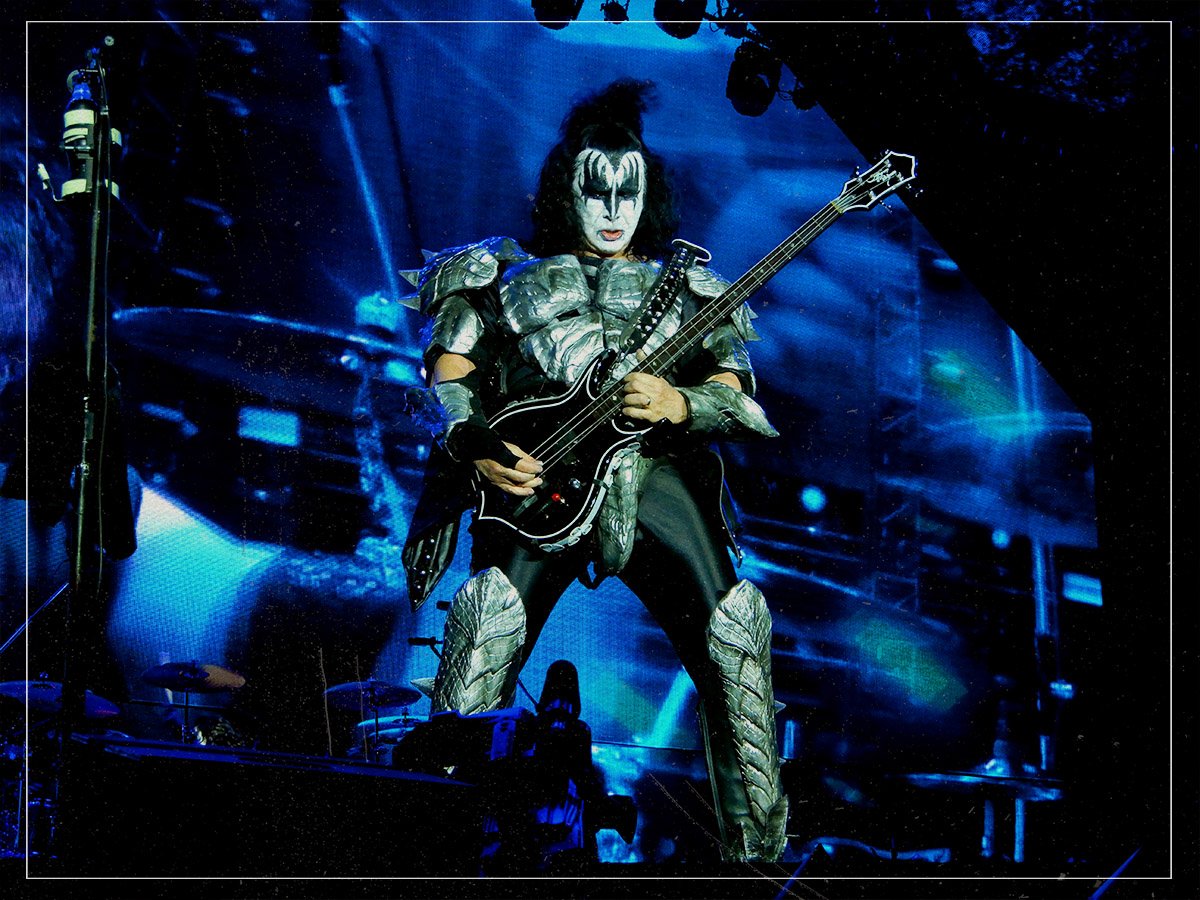

(Credits: Far Out / Tilly Antoine)
The things that spring to mind when labelling Kiss bassist Gene Simmons, cultured, isn’t the obvious quality.
Commercialised sure. Having floundered in New York’s rock scene since the late 1960s with fellow Kisser Paul Stanley, it took glam’s theatrical bombast to finally shower Simmons with the sorely chased cash, fame, and a bevvy of girls he’d tirelessly been gunning for.
Once the greasepaint had been applied and the demon-winged suit snug, Kiss would charge ahead with their new look several times before finally cracking the charts with 1975’s Alive! album, ensuring their place in rock royalty from then on.
While Stanley was the star-eyed frontman and singer, it was Simmons who stood as Kiss’ most distinctive force. Slapped in demonic make-up, breathing fire, and not above flicking his tongue slathered in fake blood, his animated alter-ego brought in the big bucks. Kiss soon became a dosh-guzzling corporate enterprise, plastering their name and likeness on everything from lunchboxes and bedsheets to coffins and Japanese meat products. For a moment, they were the premier poster band adorning every suburban American kid’s bedroom wall.
Yet, offstage and platform boots off, Simmons is at times a pretty erudite fellow with a broad appreciation for the arts, clashing with blasts of repellent arrogance, dripping misogyny, and a staunch Zionist outlook. Still, he can talk music, and intriguing nuggets of appraisal can be wrestled from his grasp when he’s feeling magnanimous, facing a reporter or journalist.
Speaking with Classic Rock in 2010, he reeled off the key encounters of his life, cycling through the likes of Lou Reed, Frank Zappa, Cher, and Michael Jackson, before bestowing special adulation on one of the 20th century’s most titanic songsmiths.
“Next to Zappa, one of the other pivotal people for me is Bob Dylan,” Simmons revealed
“There’s certainly no greater lyricist in pop culture. But Dylan is classic poetry to me”.
Gene Simmons
He then rattled off about a largely pointless conversation with Dylan that clearly tickled him: “And, I’ll never forget, he got on the phone to me out of the blue one day. I go, ‘Hey Bob’, and he’s like, ‘Hey, alright, Mr Kiss!’ Always called me Mr Kiss. Even to this day, he won’t call me Gene Simmons. I say, ‘How you doing?’ and he says, something incoherent and Bob-like. ‘Uh, what did you say, Bob?’ [Laughs]. His voice is instantly recognisable; no other human being has ever had that sound. You can’t quite figure out what country it’s from, never mind which town.”
Whether you’re Kiss or Machine Gun Kelly, all roads lead to Dylan. Like a foundational root in popular music’s vast outgrowth of branching trajectories, the troubadour’s straddle of the 1960s’ countercultural new and an authentic proximity to the folk traditions of old carry his voluminous songbook with extraordinary mileage, still possessed with an integrity that sparkles to this day.
Dylan, it turns out, isn’t a hard man to reach. In the early 1990s, Simmons contacted Dylan’s team and took a punt on requesting a collaboration. Sure enough, he arrived at Simmons’ house with an acoustic guitar and the two started sketching a number together. Appearing years later on 2004’s solo record Asshole, ‘Waiting for the Morning Light’ enjoys a writing credit from Dylan, no doubt a self-pinching moment from Kiss’ bassist demon.
Related Topics
The Far Out Bob Dylan Newsletter
All the latest stories about Bob Dylan from the independent voice of culture.
Straight to your inbox.