
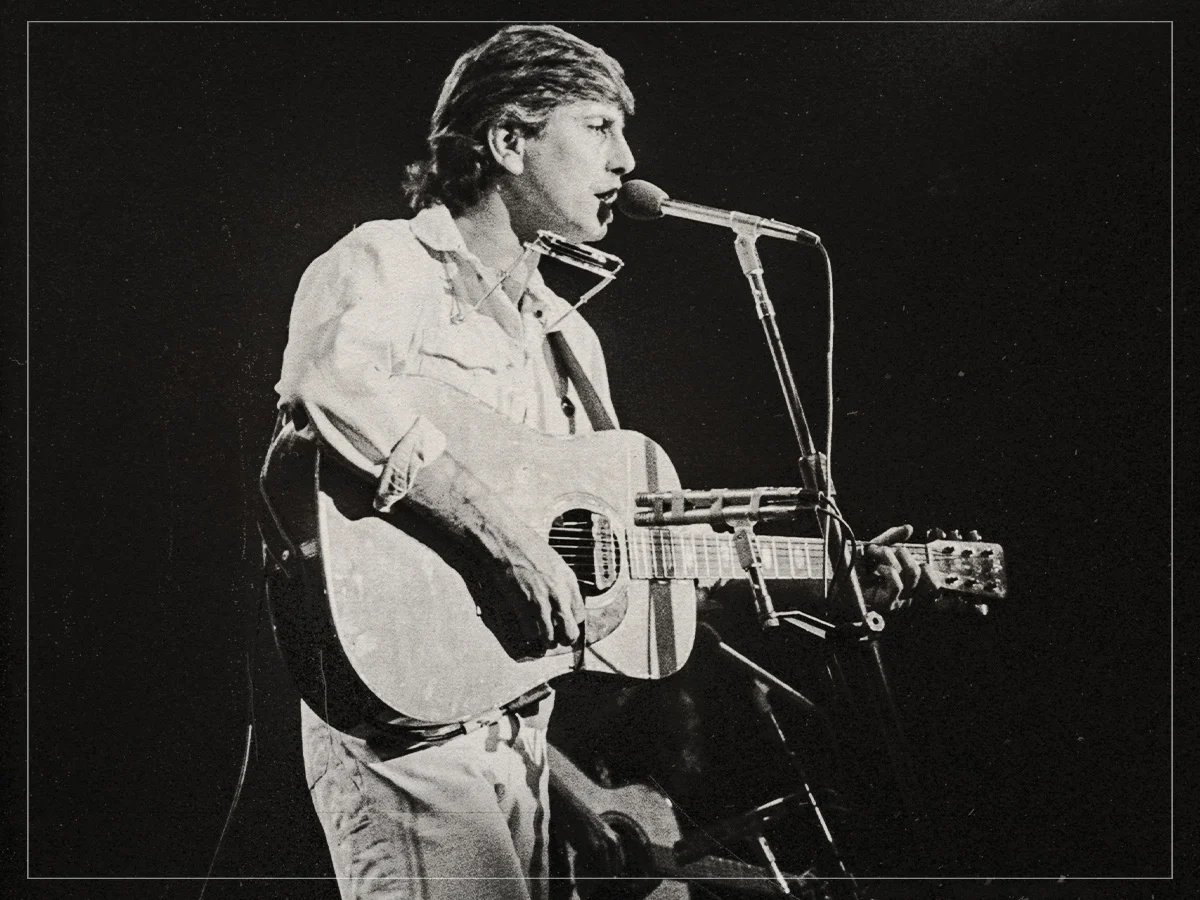

(Credits: Far Out / Acroterion)
The idea of fortune and fame never seemed to be the highest priority for Graham Nash.
He had grown up in the same kind of rock and roll scenes that The Beatles had crawled out of, but while he loved his Liverpool brethren, there was always going to be a part of him that was interested in the songs over whether his tunes would be chart hits. But before he started to fly solo and form Crosby, Stills, and Nash, he knew that he had the best artists he could think of already at his disposal.
But when listening to The Hollies’ greatest hits, they’re normally a far cry from what you’d think of when you hear a track like ‘Teach Your Children’. They definitely knew their way around a hook and had their own set of classics lined up for them, but there were bound to be a few things that were holding them back from being a truly iconic group. And it’s not like a tune like ‘Marrakesh Express’ was going to fit their style anyway.
Based on what Nash had said, the idea of them making that kind of music would have been completely alien when he left the group. They had already started to make music that was more commercial, and while there’s nothing wrong with anyone trying to score a few hits on the charts, Nash knew that his future wasn’t in trying to play covers of Bob Dylan tunes in the hopes that someone would hear them.
Even if Nash left, it’s not like the band was rudderless by any means. ‘Long Cool Woman in a Black Dress’ sounded absolutely nothing like what Nash was doing on his own, but given the rootsy rock that was coming up at the time, it didn’t feel that out of place next to the CCRs of the world, either. And a lot of their drive came from Allan Clarke taking the reins after Nash left the fold.
Although they may have been partners when The Hollies formed, Clarke was the perfect person to take over for Nash in many respects. No one was ever going to find a way to replace one of the greatest songwriters of the time, but since he was there from the beginning, it was only natural for him to step up after trading lead vocals with Nash throughout their early years. Despite Nash leaving the group, he was more than happy to see Clarke get the recognition he deserved at the Rock and Roll Hall of Fame.
Nash didn’t need the adulation, but he felt that Clarke’s contribution to the band had gone underappreciated for too long, saying, “I must say my overwhelming is my happiness for Alan Clarke. I think he’s one of the most underrated lead singers a band could ever have and I think he’s going to get his due today. I’ve known him for about 62 years. [We] started performing together when we were at school. I didn’t realise he was singing the melody and I automatically went to the harmony. We began to realise that our voices blended pretty well.”
While there are moments on those early Hollies albums that do bring back faint memories of John Lennon and Paul McCartney, Nash always had greater plans. He had a fantastic ear for pop songs when the band got started, but he was also a bit of a maverick compared to Clarke, who seemed far more content with going with the flow rather than worrying about expressing himself in a different way.
Not everything that Nash played had to be unconventional but even if he had to leave a few of his old friends behind when making his own masterpieces, there’s no way of forgetting those humble beginnings. The Hollies may get placed in the lower tier of mandatory 1960s artists to listen to, but it’s hard to describe that kind of feeling of a bunch of kids slowly figuring out how to be rock stars.
Related Topics