
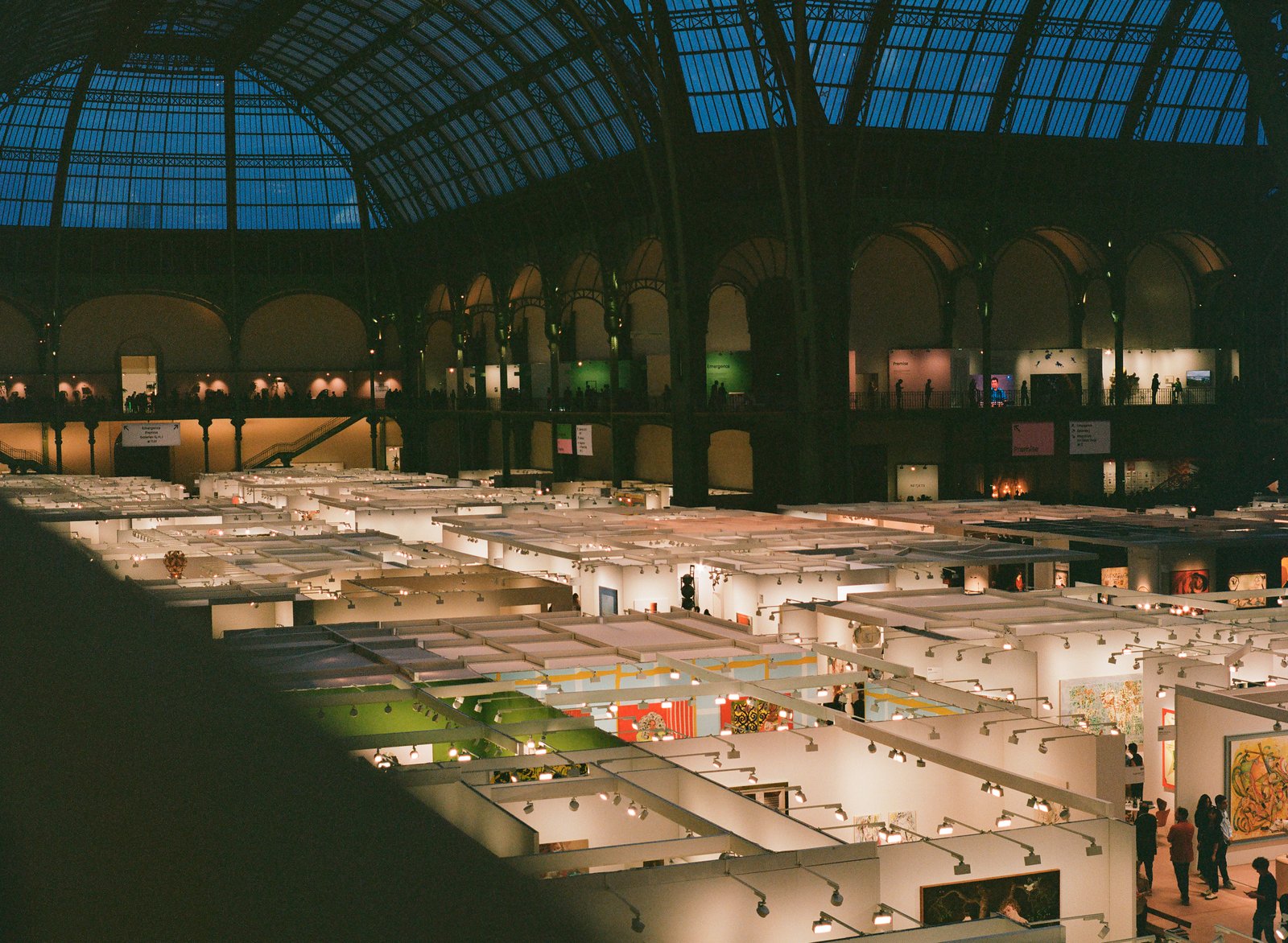

In the race to deliver masterpieces to the world’s top art fairs—from Art Basel to Frieze—the global art market faces an increasingly pressing dilemma: how to meet the fast-paced needs of the global glitterati without compounding the climate crisis. While the international travel of collectors, curators and gallerists is carbon-intensive, so too are the logistics behind the art fairs they travel to. With transportation as one of the most significant contributors to the art sector’s carbon footprint, this issue can no longer be left on the margins.
An industry on the move
Fine art logistics is a uniquely complex and specialized field. Every artwork, whether a centuries-old sculpture or a modern 3D installation piece, requires bespoke handling, often under climate control, with security and insurance considerations. This means crates, packing materials, specialized transit and, frequently, air freight.
According to the Gallery Climate Coalition (GCC), transport accounts for nearly 80 percent of a typical gallery’s carbon emissions, with air freight by far the most polluting. A 2021 study conducted by U.K. non-profit Julie’s Bicycle estimated the global art sector’s total carbon footprint at 70 million tonnes of CO₂e each year, with art shipment and travel responsible for approximately 26 percent or 18 million tonnes of CO₂e. Additional research suggests that up to 95 percent of art organizations’ emissions stem from global freighting, grid energy use and business travel. Art fairs remain a particularly high-impact area: a typical commercial gallery may attribute one-third of its total annual emissions to fair participation. These emissions accumulate quietly but quickly. Consider this: shipping one metric ton of art cargo from London to New York by air emits roughly two metric tons of CO₂e—the equivalent of driving a typical passenger car for over 5,000 miles.
Disposable crates, single-use mindsets
Beyond transportation, another challenge looms: packaging waste. The industry standard is still the wooden crate—custom-built, often lined with plastics and foam, and often discarded after a single use. Despite their durability, most crates are disposed of after fairs due to the costs involved in long-term storage of empty crates, and as these fairs proliferate and global participation widens, so too does the volume of discarded crating.
Rethinking the logistics chain
The good news is that a shift is underway. Logistics professionals, often operating behind the scenes, are now pushing for measurable change and guiding the art world toward lower-impact alternatives. Several emerging strategies are gaining traction:
Carbon tracking and accountability
More firms are conducting detailed CO₂e audits, using tools like the GCC Carbon Calculator to assess emissions across their supply chains. Certifications such as Planet Mark, held by leading fine art logistics companies like Gander & White, commit companies to year-over-year reduction targets based on independently verified data. Tracking scope 3 emissions—those that occur outside direct operations but within a company’s broader value chain—helps organizations benchmark progress and identify meaningful targets to reduce their overall carbon footprint.
Reusable crating systems
Innovations like ROKBOX Loop—a circular art crating solution—are replacing traditional wooden crates. Reusable, recyclable and designed for repeated use, these systems can cut emissions by up to 90 percent per shipment compared to single-use crates, especially when deployed across multiple fairs.
Sustainable storage facilities
Climate control is essential for fine art storage to ensure that masterpieces are not damaged by environmental factors, but can also be energy intensive Some upgraded facilities, like the developed by Gander & White and set to open later this year, use multi-layer insulation and energy-efficient temperature control units to reduce the electricity required to keep the space cool.
Low-emission and electric vehicles
The push toward electrification is finally reaching the fine art sector. Electric crew vans and heavy goods vehicles (HGVs) with 300km ranges and fast-charging capabilities are increasingly being used for last-mile deliveries within metropolitan areas. At its London facility, Gander & White has added an electric HGV to its fleet, a crucial upgrade given the high volume of city-center installations that follow international shipments.
Slower, smarter shipping
Some galleries are embracing consolidated sea freight as a more sustainable, if slower, option, particularly for less time-sensitive works. While ocean freight is not emission-free, it is significantly less polluting than air: shipping by sea emits 47 times less CO₂ per tonne-kilometre than by air.

The cultural shift is still needed
Despite these advances, sustainable logistics in the art world is still the exception, not the rule. Deep-rooted preferences for speed and convenience—often driven by client demand or market pressure—make systemic change difficult. The art world has long operated on just-in-time logistics, where last-minute shipments and flexible handling are prized over efficiency.
That mindset is beginning to shift. Fair organizers, galleries, collectors and transporters alike are increasingly recognizing that reducing emissions is not only a moral imperative but also a reputational one. Organizations such as the Gallery Climate Coalition, which now has hundreds of members, including major institutions, are driving this momentum by calling for an end to unnecessary air freight by 2030. Ideally, this will encourage galleries to plan their shipments further in advance and embrace sea freight recommendations so that we can collectively avoid the carbon cost of last-minute deliveries by air.
Looking ahead
There is no one-size-fits-all answer to sustainable art shipping. But the tools, technologies and methodologies already exist. What’s needed now is commitment at both the institutional and individual levels. From adopting carbon audits and reusable crates to advocating for consolidated freight and electric vehicles, the industry has a growing number of levers it can pull.
As art fairs continue to expand and the global exhibition circuit grows more demanding, the environmental cost of showcasing culture cannot be ignored. Logistics professionals are uniquely positioned to lead this change, not just by optimizing their own operations, but by educating and empowering clients to make lower-carbon choices.
The challenge is significant. But if the art world can be a leader in aesthetics, innovation and global dialogue, it can—and must—be a leader in sustainability as well.