
[ad_1]
In today’s enervated art industry, risk and compliance is a rare growth sector. Protecting participants from increasing regulatory scrutiny and, occasionally, their own blind faith, is a burgeoning business.
“Many people are very casual in the way they deal with high-value art, in a way they wouldn’t behave in their professional world,” says Jane Levine, a former federal prosecutor and chief compliance counsel at Sotheby’s. “The idea of turning over your business to a potential buyer without a contract or protection is lunacy, right? But in the art world, that happens every day—you give the work to a dealer and if they sell it and don’t pay you, you’ve lost that work.”
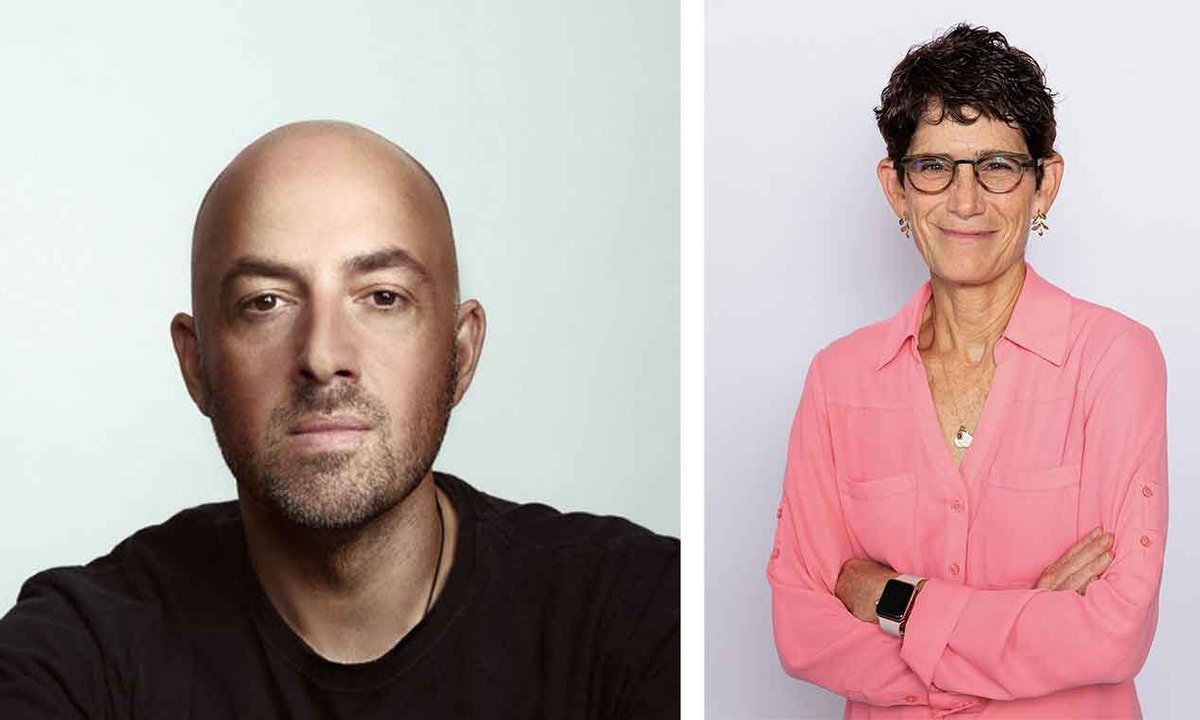
This is one reason why Levine, along with Jim Wynne, Jordan Arnold and Victoria Sears Goldman, set up The ArtRisk Group, a New York-based risk advisory and private investigation firm. The firm brings together decades of experience working across art theft, fraud, provenance issues, due diligence and legal matters.
Levine was once an assistant US attorney for the Southern District of New York, where she served as Special Trial Counsel to the FBI (Federeal Bureau of Investigation) Art Crime Team, before spending 13 years at Sotheby’s as its chief global compliance counsel and head of government affairs.
During her time working with the FBI, Levine met Wynne, who spent over 30 years with the bureau’s Major Theft Squad and was a charter member of its National Art Crime Team. Wynne works closely with Arnold, a former prosecutor with the Manhattan District Attorney’s Office and counsel to the New York Police Department (NYPD) Major Case Squad who has worked on investigations into art theft, fakes, forgery and fraud. Sears Goldman, meanwhile, is a provenance and art market researcher who was an expert witness in the well-documented Knoedler Gallery fraud case in 2016.
A ‘one-stop shop’
ArtRisk is one of a number of compliance and risk advisories to have sprung up in response to a cocktail of pressures on art businesses. On the one hand is rising scrutiny and regulation, in particular toughening anti-money laundering legislation, potentially including the Art Market Integrity Act, proposed by US senators in July to bring the US in line with the EU and UK. On the other, threats from bad actors—cybercrime, artefacts looted from conflict zones, and good old-fashioned fraud. Its founders describe ArtRisk as a one-stop shop, with services spanning investigations and recoveries, provenance research, due diligence and compliance, litigation and art financing support, and security, whether virtual or physical.
Speaking in June, after the art adviser Lisa Schiff was sentenced for stealing $6.5m from her clients, conversation turns to the white-collar art crime of choice: consignment fraud. “With consignment fraud, the more things change, the more they remain the same,” says Wynne, who has conducted countless art fraud investigations since he started with the FBI in 1983. “Every two or three years, there’s a case that gets publicity. Schiff, [Inigo] Philbrick, Michel Cohen, Larry Salander—all were involved with consignment fraud… it’s just very easy to do, and by and large it’s dealers taking advantage of people they know.” Wynne gives a familiar example: a collector’s long-time art dealer and friend is taking advantage of payments in and out to keep up with their lavish lifestyle. “Sooner or later, the house of cards collapses. It’s the same thing over and over again.”
Trust on autopilot
And the story repeats itself because it is so easy to do, Wynne says: “Everything is done privately, there’s no registration of title so there’s nothing that could protect the owner, like with an automobile.” When it comes to art, Arnold says, people put their trust on autopilot: “Someone appears to be trustworthy, has a good track record at surface level, and you don’t do the things that help you safeguard against losses down the road… doing that preventative work needs to be customary.”
That preventative work also needs to be customary in the field of cybersecurity, Arnold adds. “The vast majority of these compromises are not the result of nation state attackers or super sophisticated cyber criminals, they’re the result of failing to get the basics right around account security,” Arnold says. “It can be a very sobering moment when the victim, especially a small gallerist or a dealer, realises what little it would have taken to prevent the compromise in the first place.” ArtRisk can bring in the right expertise, Arnold says, to make sure that their IT environments are as secure as they can be: “There’s no such thing as 100% prevention, but there’s just so much that can be done to knock out the vast majority of vulnerabilities.”
One of the consignment fraud cases Arnold worked on with Wynne was that of the British art dealer Timothy Sammons, who was sentenced in 2019 for stealing between $10m and $30m from his clients via a Ponzi-like scheme.
Wynne, alongside Levine, also brought down the audacious art dealer Ely Sakhai, who started buying second-rate paintings by first-rate Impressionist names at auction in the late 1980s, then had them copied to sell at auction in Asia, mostly Japan and Taiwan. In the largely pre-internet 1990s, nobody joined the dots. Starting in the 1990s, Wynne gathered the paintings in one place and tied them all to Sakhai, who was eventually prosecuted in 2004. “He got away with it for a long time, until Jim brought him down,” Levine says.
Give it to them on a plate
Arnold, Levine and Wynne have all worked in law enforcement and will always try to get agencies such as the FBI and NYPD, involved in investigations. “That’s part of trying to get things done, because law enforcement obviously has tools that we don’t have,” Wynne says.
With such law enforcement agencies increasingly stretched, the majority of art-related cases today are civil, not criminal. So, Wynne’s advice is to make the job of those agencies easy, build their case for them by ensuring you have a paper trail from day one of any deal. People should structure their transactions “to mirror the criminal elements of mail and wire fraud or the National Stolen Property Act, because you want to give law enforcement the easy stuff on a silver platter, so that they are interested,” Wynne says. “Use the mail [services]—it could be a violation within a fraud if the mails are used, and/or the wires—no hand deliveries—use FedEx or whatever,” Wynne adds. “You want to create a transaction that’s structured around potential criminal violations. Consult with your lawyer to do that.”
Check it’s still there
Another piece of advice Wynne gives is to avoid generic self-storage facilities for art, and even in a specialist facility, regularly check it is still there: “You need to close the window where this stuff could potentially be removed by employees who are problematic… they’ll take advantage of their access.” Such instances can result in “very, very difficult” cases to solve, Wynne says: “A case involving something that has just disappeared with no leads is very problematic.”
Extra caution needs to be taken when buying antiquities too, an area in which Levine specialises (she is a board member of the US Committee of the Blue Shield, the not-for-profit that safeguards cultural property). “In general, there is a time lag, often five or more years, before objects that are looted from the ground appear on the market,” Levine says. “Thus, the timing for us to start seeing things from armed conflict and political instability in Syria, Iraq, Yemen is now, and will only grow; we can expect to see more from Ukraine in years to come.” Lower-value items, often traded online, are most problematic, Levine says: “It is largely a free for all [with] no need to involve intermediaries as anyone can list and sell from and to anywhere. And the low value makes it challenging for law enforcement agencies, with limited resources, to pursue.”
It is key for buyers, sellers and marketplace operators to understand what is going on, Levine says, “to have a grip on where looting has taken place, not just now but in the past, and to have basic due diligence protocols in place to avoid being involved in these kinds of sales that not only are illegal but contribute to destroying our ability to know the past.”
[ad_2]
Source link