
[ad_1]
A version of this article originally appeared in The Back Room, our lively recap funneling only the week’s must-know art industry intel into a nimble read you’ll actually enjoy. Artnet News Pro members get exclusive access—subscribe now to receive the newsletter in your inbox every Friday.
When they began to proliferate in the early 2000s, art investment funds were viewed variously as the future of the art market and as a force that could lead to its demise. These funds seek to expand access to the market by pooling investments to acquire artworks, and while they have a checkered reputation, some of their leaders say they are evolving for the better.
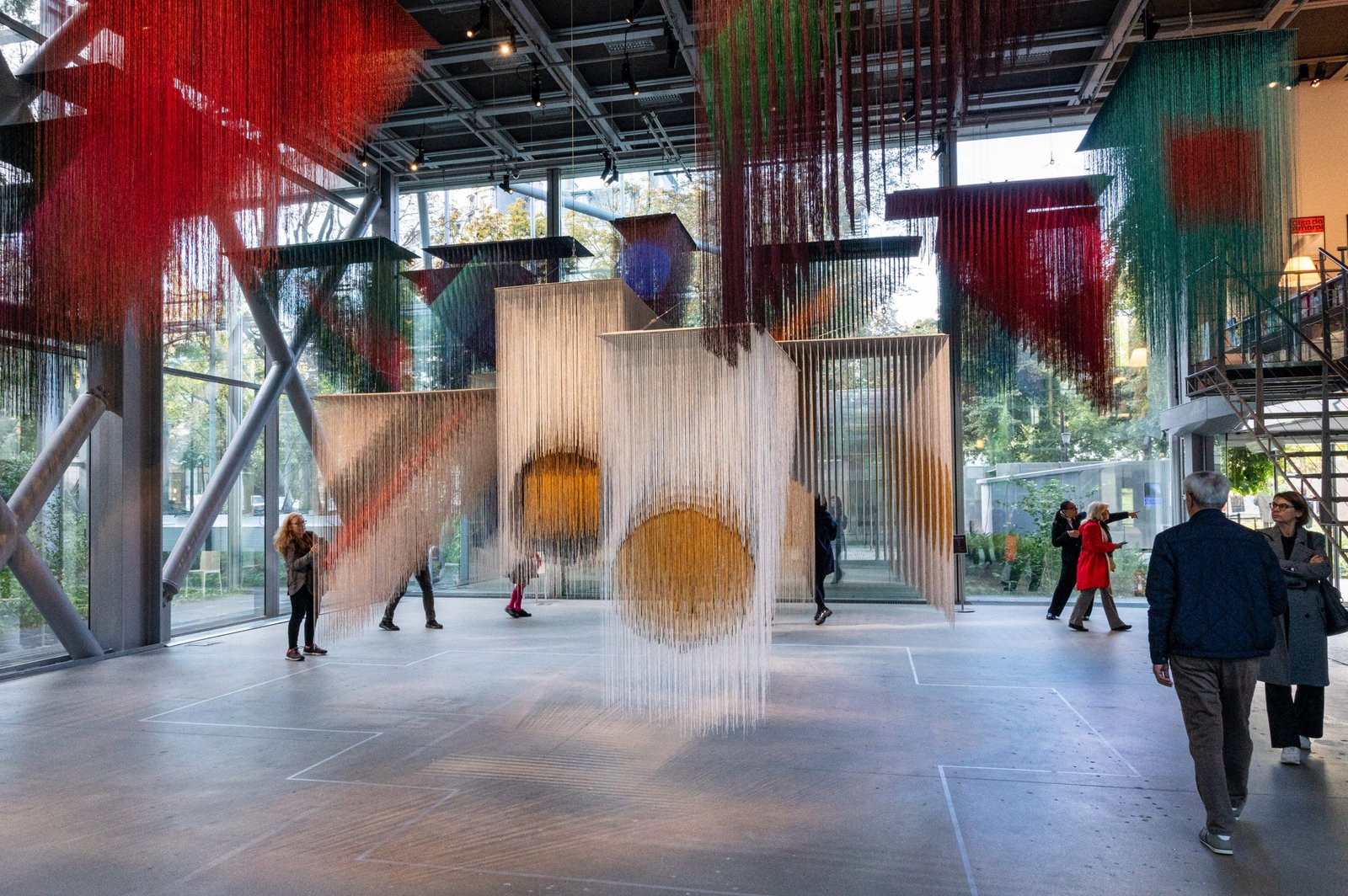
For instance, Arte Collectum, a fund based in Stockholm, is capitalizing on what it calls the “megatrend of revisionism” sweeping both museums and the market in the last decade. The firm invests in works by women and other historically or geographically marginalized artists. Its first fund raised €20 million ($20.8 million) in 2022, with which it bought 46 works by artists such as Olga de Amaral, Howardena Pindell, Wook-kyung Choi, and Michael (Corinne) West.
It has just launched its second fund, which made its first acquisition this week: Petroglyph Park: Sunset on the Escarpment (1987) by the groundbreaking Native American artist and activist Jaune Quick-to-See Smith, who died in January, aged 85.

Jaune Quick-to-See Smith, Petroglyph Park: Sunset on the Escarpment (1987). Courtesy of Arte Collectum.
According to Lars Nittve, the chair of Arte Collectum’s investment committee, women artists and those outside of the Western art historical canon have been historically valued up to 20 times lower than their male counterparts. That has shifted down to five times in recent decades as museums seek to right the balance of their collections, “but there is still a considerable gap,” he said, especially when it comes to more historical categories.
Arte Collectum follows a private equity model, operating on a six-year term, with an option to extend by two years. It charges investors 2 percent annually and takes 20 percent of profits, aiming for net returns of 12 percent per year. Its co-founder and CEO is finance pro Jonas Höglund, and its investment committee includes Swedish art dealer Niklas Belenius and Deborah Gunn, who previously managed the art collection of Microsoft billionaire Paul Allen. (Allen’s collection sold for $1.6 billion at Christie’s in 2022, making it the biggest sale in art-market history.)
Nittve is a veteran of the museum world, having led Tate Modern in London, the Louisiana Museum of Modern Art in Denmark, and M+ in Hong Kong. As such, a core component of Arte Collectum’s strategy involves building artworks’ value through museum loans, rather than stuffing its acquisitions into storage.
“By doing this, we fulfill a duty we believe we have both towards the artists and the public,” he said. The first fund has so far lent to 12 museums globally and it plans to lend to eight exhibitions coming up in the U.S. and Europe, including the Pollock-Krasner House and Study Center in East Hampton, N.Y., the V&A Museum in London, and the Fundació Joan Miró in Barcelona. (When works are not on loan, they are held at the Delaware Freeport in the U.S. or MTAB in Stockholm.)

Installation view of works by Wook-kyung Choi at the Kunsthalle Bielefeld, lent by Arte Collectum. © Wook-kyung Choi Estate. Photo: Philipp Ottendörfer.
Is Arte Collectum’s strategy paying off? The first fund acquired Carmen Herrera’s Friday (1978), which, according to a Sotheby’s valuation, has increased in value by 40 percent within one year and is now estimated at €2.8 million ($2.92 million). Despite the art market’s contraction over the last two years, demand for works by women and artists of color has not been “as affected” as other categories, according to Nittve.
One case study: The fund acquired a work by a woman artist at an auction house in the Midwestern U.S. in 2023—a bit “under the radar,” Nittve said—but opted to sell it in 2024, rather than keep it until the end of the fund’s six-year vesting term, after the committee received a “good offer.” The sale generated a 157 percent return. Since the deal took place within 18 months of the time of acquisition of the work, the proceeds have been reinvested in accordance with the fund’s investment strategy.
Investment transparency is one of Arte Collectum’s goals, according to Höglund, the CEO, who said that when Niklas Belenius “asked if I wanted to set up an art fund together with him, I had a couple of prerequisites.” That included listing it as an alternative investment fund on a stock exchange. It is the first company in the Nordics to manage funds, and is publicly traded with units registered with Euroclear and distributed by the Nordea and SEB banks. As such, it must follow strict regulations and extensive reporting duties.

Carmen Herrera, Friday (1978). © Carmen Herrera Estate. Courtesy of Arte Collectum.
Interest in owning art as part of an investment portfolio has increased in recent years. According to a 2023 Deloitte report conducted with ArtTactic, 90 percent of asset managers felt positive about owning art as part of their portfolio—up from 53 percent a decade ago—and 63 percent had integrated art into their offerings.
Still, the notion of art as an asset class remains hotly debated within the trade. According to Artnet’s indices, postwar and contemporary art have a low correlation with other asset classes, like gold and home prices, but Höglund says that means “it’s a good alternative within alternative assets.”
Arte Collectum also offers a socially responsible investment option at a time when ESGs—funds that consider environmental, social, and governance issues—are on the backfoot. Last year, BlackRock, the world’s largest investment firm, substantially scaled back its support for shareholder proposals focused on such matters. With DEI initiatives being dashed by the Trump Administration, there’s no time like the present to push back.
[ad_2]
Source link