
[ad_1]
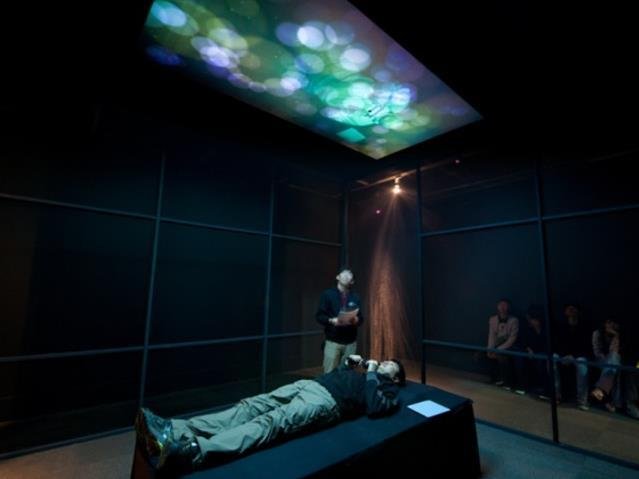
The Heart Library Project. Courtesy George Khut
There’s a growing body of medical research into the use of multimedia and gaming technologies for such tasks as stroke rehabilitation and pain management.
I believe that aesthetics play an important but often unacknowledged role in this work. Beyond just making things look pretty, the look, sound, and behaviour of these interactive designs can have a significant impact on what and how we feel.
BrightHearts is a creative relaxation training app developed by Sensorium Health – the company I founded with fellow Sydney-based interaction designer Jason McDermott. It’s designed to help people observe and regulate stress and relaxation responses.
The app measures and translates changes in heart rate into a colourful and calming interactive art experience. It was originally designed as part of a research project with Dr Angie Morrow, a staff specialist in brain injury at Sydney’s Children’s Hospital at Westmead.
From art gallery to app store
Biofeedback training is a way of teaching people to regulate aspects of their bodily functions by providing a real-time representation of the function being measured. By observing this sensor-driven display, subjects can learn to sense and eventually influence the signal being measured.
I started working with biofeedback in 2002, excited about the possibilities for a new way of experiencing and interacting with our bodies. This work combined the “objectivity” of bio-medical sensing technologies with the meditative sensibilities of eastern body-mind practices and the evocative power of live electronic art and music.
In 2009, I piloted one of these works in a waiting area at St Vincent’s Public Hospital Darlinghurst in a project called the Heart Library Project. Visitors to this immersive, interactive exhibit explored connections between their breath, emotions and heart rate via a video image of themselves. This image was overlaid with colours and textures that changed according to subtle shifts in heart rate. After this they illustrated their experience using a body-map template to document the sensations, emotions and images they experienced during their interaction.
Since then I’ve continued my research into applications for interactive art in hospitals.
In 2011, I began the aforementioned collaboration with Dr Angie Morrow. We designed an interactive experience for children undergoing painful recurrent procedures such as injections, blood collection and central line changes. Anticipatory anxiety can be a serious problem for many children that can lead to significant distress, difficult behaviour and delays to clinic schedules.
The BrightHearts research project aims to evaluate the efficacy of our app for managing the pain and anxiety experienced by children during these procedures. The project will compare the reports from children using the BrightHearts biofeedback app compared to existing iPad-based distraction methods.
How the app works
The BrightHearts app rewards decreases in the user’s heart rate with colourful animated visuals and sound effects. It provides users with a tangible experience of connections between their mind and body and their capacity to regulate these interactions with their breathing and relaxation.

Screenshots from BrightHearts app showing visualisation for slower heart rates (blue) and faster heart rates (red). The goal of the interaction is to voluntarily influence the diameter of the rings, and the colour of the background – moving from red to organge, yellow, green and blue (slowest).Sensorium Health Pty Ltd.
BrightHearts combines the principles of biofeedback interaction that have been in use since the 1970s with an “immersive” multimedia aesthetic that I’ve been working with for the past 12 years.
This approach takes a softer, more contemplative approach to visualisation than is usually associated with mobile games and information graphics. It’s about designing for a more relaxed way of looking – seeing but and feeling – but not necessarily “reading” or counting.
The past decade has seen growing interest in the application of art and design in health and medical research – and the important role that emotions, motivation and aesthetics play in human learning and recovery.
The best is definitely yet to come, but it is important to stress that this type of work will only become a reality in actual clinical practice – when there is a sufficient body of evidence-based research to confirm the effectiveness and viability of these approaches in clinic.
This piece was first published in The Conversation.
[ad_2]
Source link