Close Menu
Rate My ArtRate My Art
  • Home
  • Art Investment
  • Art Investors
  • Art Rate
  • Artist
  • Fine Art
  • Invest in Art
What's Hot

Contemporary art in the spotlight of the Riviera: Fine Art Cannes

May 21, 2026

‘It keeps me in touch with life’: The London artist still working at 103

May 21, 2026

THE KEY WEST GALLERY GUIDE

May 21, 2026
Facebook X (Twitter) Instagram
  • Terms and Conditions
  • Privacy Policy
  • Get In Touch
Facebook X (Twitter) Instagram Pinterest Vimeo
Rate My ArtRate My Art
  • Home
  • Art Investment
  • Art Investors
  • Art Rate
  • Artist
  • Fine Art
  • Invest in Art
Rate My ArtRate My Art
Home»Invest in Art»Artists would do well to invest in their own work, study says
Invest in Art

Artists would do well to invest in their own work, study says

By MilyeOctober 18, 20243 Mins Read
Share Facebook Twitter Pinterest LinkedIn Tumblr Reddit Telegram Email
Share
Facebook Twitter LinkedIn Pinterest Email

[ad_1]

A new study by Amy Whitaker, an assistant professor in visual arts management at New York University, and Roman Kräussl, a professor of finance at the University of Luxembourg, has found that artists may be better off investing in their own work than in the stock market.

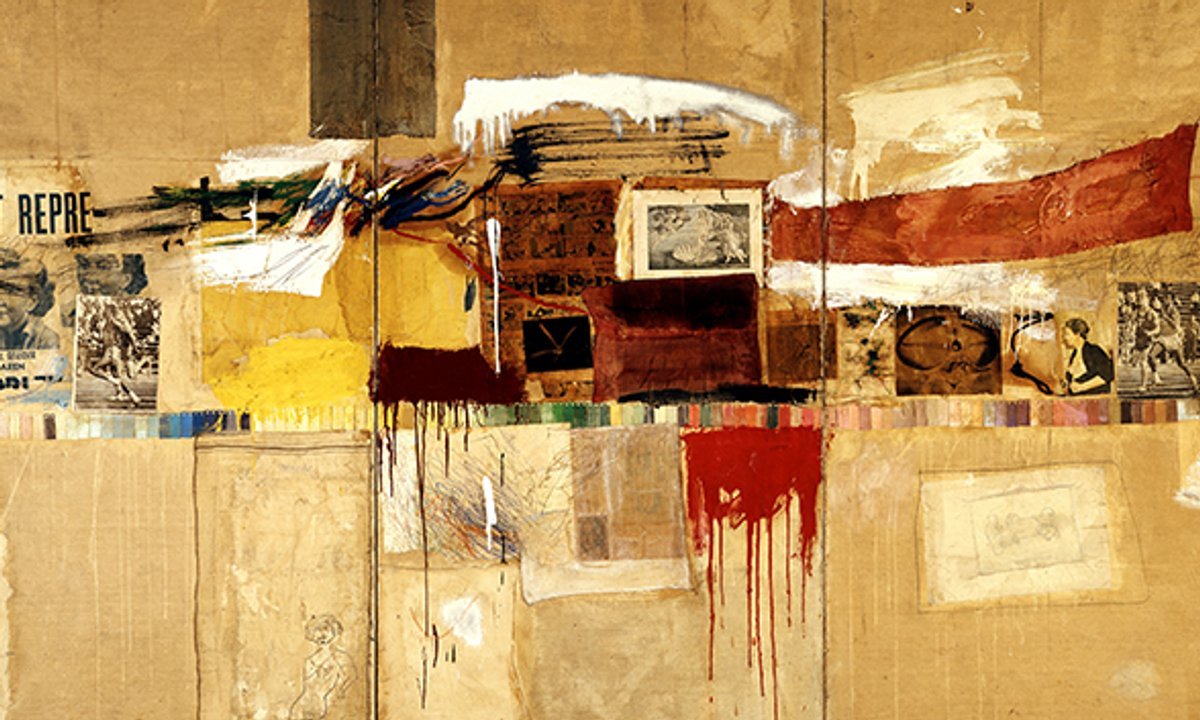
In their paper, titled Democratizing Art Markets: Fractional Ownership and the Securitization of Art, the authors, using historical sales data from the Leo Castelli gallery, have modelled a sample portfolio to determine what would have happened had Jasper Johns and Robert Rauschenberg retained 10% equity in their own works sold by Castelli between 1958 and 1963. For example, they find that if Rauschenberg had retained 10% of Rebus (1955), originally sold for $2,800, the return on that investment would have generated $575,000, based on 10% of the hammer price of its last auction sale, for $5.75m, at Sotheby’s New York in 1988. Johns fares even better, with False Start (1959), originally priced at $1,000, rising to a value of $15.5m (hammer) at its last auction (also Sotheby’s New York in 1988), a return of $1.55m. Comparing with the S&P 500 during that same period, Whitaker and Kräussl find that returns on works by Rauschenberg would have performed up to 140.8 times better and Johns’s up to 986.8 times better than if the artists had invested their money in the financial markets.

While cautioning that these two cases represent optimistic scenarios, the authors extrapolate that artists and even dealers may benefit from a system wherein they forgo cash at the point of a work’s initial sale for fractional equity in that work going forward. Unlike resale royalties, which depend on regulation and enforcement, such fractional shares, enabled by blockchain technology, could be traded independent of the work itself, opening up a path for artists to access market-driven patronage.

Investors, meanwhile, could easily acquire and maintain a diversified portfolio of shares, distributing their risk. The authors theorise that the fractional equity model could extend to any creator whose work is difficult to value in the early stages, but often generates profits later that they then miss out on.

According to Whitaker, artist-­retained fractional equity addresses a “structural misalignment” in the art market. “Our analysis shows that the people most rewarded by a system like this one are those who are the earliest to take a bet on the art,” she says. “What’s exciting is that this is an idea which arises from within the arts, as opposed to being imposed on the arts by financial actors.”

[ad_2]

Source link

Share. Facebook Twitter Pinterest LinkedIn Tumblr Email
Previous ArticleInvestors target booming digital art market despite ‘heist’ fears
Next Article Malaysian artist gives shapeshifting Venom a batik makeover

Related Posts

Invest in Art

Leadership capability | Creative Australia

May 20, 2026
Invest in Art

Music education can make a difference for young people, if Baltimore City schools invest in it

May 20, 2026
Invest in Art

Ireland eyes permanent status for basic income for artists

May 18, 2026
Add A Comment
Leave A Reply Cancel Reply

Top Posts

How can I avoid art investment scams?

August 26, 2024

Art Investment Strategies: How to Capitalize on the Buyer’s Art Market

August 26, 2024

Investing in Fine Art Made Simple

August 26, 2024
Monthly Featured
Art Investment

No Cookies | Townsville Bulletin

MilyeMay 6, 2026
Fine Art

Despite budget cuts, Fort Worth ISD fine arts ‘untapped resource’ for boosting academic achievement

MilyeOctober 30, 2024
Art Investment

Ex-Credit Suisse Banker Bridging Worlds of Finance and Art

MilyeMay 17, 2026
Most Popular

Xcel Energy backs off plans for another gas rate hike in Colorado

October 21, 2024

Wynton Marsalis Named Lincoln Center’s 2026-2027 Visionary Artist

May 21, 2026

WWE Hall Of Famer Praises Roman Reigns As “A True Artist”; Compares Success To Seth Rollins’ Rise

October 16, 2024
Our Picks

Arkley Fine Art shut Hitchin gallery after nearly a decade

March 8, 2026

Joe Hendry Wants Grammy Winning Artist In His Corner At TNA Bound For Glory

October 15, 2024

Epstein files highlight how the wealthy borrow against art collections

May 6, 2026
Weekly Featured

Biennale Arte 2026 | Voting Procedures for the Visitors’ Lions

May 9, 2026

Erica Rutherford might be the most visionary Canadian artist you’ve never heard of

September 23, 2025

Investors and art lovers get chance to buy a slice of Francis Bacon on new stock exchange

August 28, 2024
Facebook X (Twitter) Instagram Pinterest Vimeo
  • Get In Touch
  • Privacy Policy
  • Terms and Conditions
© 2026 Rate My Art

Type above and press Enter to search. Press Esc to cancel.