
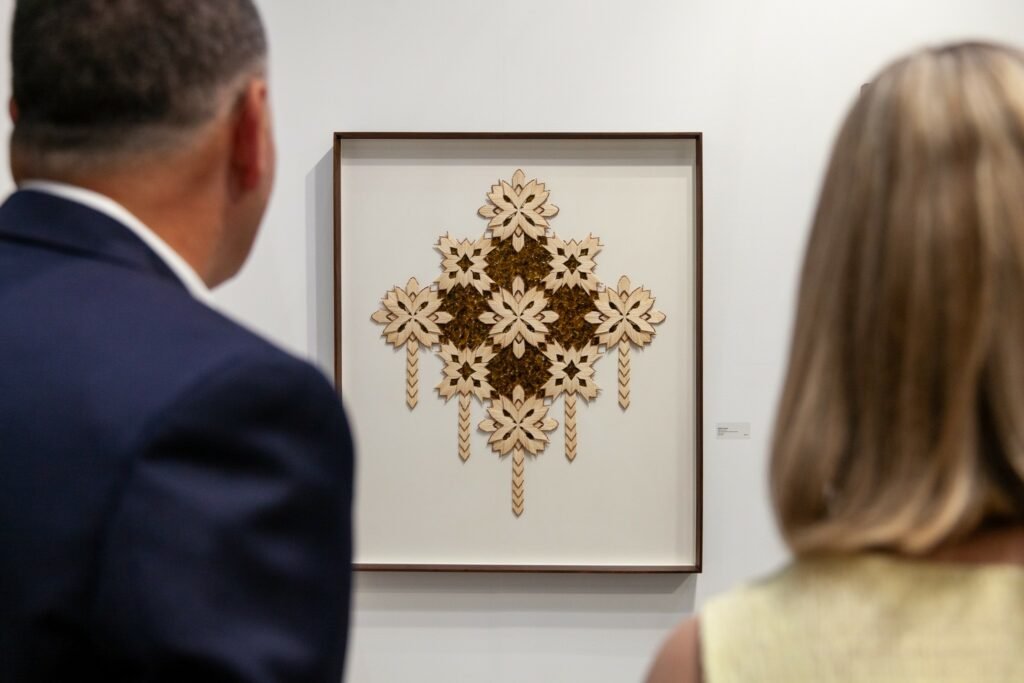
Unlike many other assets, artworks held by a natural person as part of a private collection can qualify as “personal-use assets”, meaning profits on sale may fall outside the capital gains tax (CGT) in certain circumstances.
Listen:
The role and impact of alternative investing [Oct ’24]
Alternative assets on the ascent: Investing outside the box [Sep ’24]
Moneyweb spoke to Elizabeth Fick, head of tax and fiduciary at Investec, and Tristanne Farrell, senior investment manager at Investec Wealth & Investment International, on the sidelines of the Investec Cape Town Art Fair recently.
This year’s fair – in February – attracted more than 20 000 visitors and featured over 100 galleries from around the world, showcasing hundreds of artists across multiple exhibition spaces.
Personal-use asset classification
According to Fick, artworks purchased by a natural person primarily for enjoyment rather than trade will generally qualify as personal-use assets.
Personal-use assets are assets owned by a natural person or a special trust and used mainly for purposes other than carrying on a trade. The Income Tax Act excludes certain items from this category, however, including gold or platinum coins, immovable property, aircraft exceeding 450kg, boats longer than 10 metres and financial instruments.
Crypto assets are also excluded as cryptocurrencies are regarded as financial instruments for tax purposes.
Assets that typically qualify as personal-use assets include private motor vehicles, microlight aircraft, smaller boats, personal jewellery and antiques.
In practical terms, this means that if an individual buys art to display and enjoy – rather than to buy and sell for profit actively – the asset will typically fall within this category.
“Important to note, though, only natural persons have this benefit,” Fick stresses.
The tax treatment changes if the activity resembles a commercial venture. If a person acquires artworks with the intention of trading them for profit, as a gallery would, the works will no longer qualify as personal-use assets and would instead be subject to taxation.
Also, if artworks are owned by a company or trust – except in the case of certain special trusts – they will not qualify as personal-use assets, and taxes will apply.
ADVERTISEMENT
CONTINUE READING BELOW
Determining the tax outcome on sale
The tax outcome when an artwork is sold depends largely on the intention behind the acquisition and the structure in which it is held.
Where artworks are owned by companies or trusts, tax implications will arise either as income tax or capital gains tax. The determining factor is whether the intention was to trade in art or to hold it as a capital asset.
“If a collector is a natural person and does not hold the art with the intention to trade, they can rely on the personal-use asset relief, and there would be no CGT on the sale of the art,” Fick says.
If trade is the intention, either capital gains tax, or income tax applies, based on the facts and circumstances.
Estate planning considerations
Artworks form part of a person’s estate in the same way as other assets and should therefore be addressed explicitly in a will, says Fick.
If collectors want specific works to pass to heirs, this needs to be clearly recorded in their estate planning documentation.
“Families sometimes decide this together and put stickers at the back of each artwork to indicate who inherits what,” she says. “This aligns with your will and avoids conflict.”
Without such provisions, artworks may be dealt with in terms of the provisions of the clause that deals with household effects or the residue, depending on how the will is drafted.
“The heirs may then be different from the intended heirs,” Fick notes.
Read: Art: A billionaire’s side hustle [Aug ’23]
Donation tax implications
ADVERTISEMENT:
CONTINUE READING BELOW
Although personal-use assets may be exempt from CGT in certain situations, artworks are still treated as ordinary assets for donation tax purposes.
Fick notes that donation tax can apply when artworks are given to family members, trusts or other persons, generally at a rate of 20% on the first R30 million and 25% thereafter.
There are, however, notable exemptions. Donations between spouses are exempt, as are certain donations to approved public benefit organisations, which may include museums.
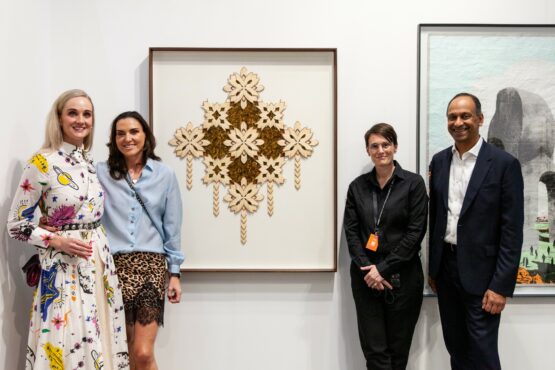
From left: Elizabeth Fick and Tristianne Farrell from Investec with Emma Vandermerwe, from Everard Read CIRCA Gallery Cape Town and Cumesh Moodliar, CEO of Investec South Africa. Image: Supplied
Documentation, provenance, and record keeping
Proper documentation is essential for collectors seeking to protect the value and authenticity of their works.
Tristanne Farrell, senior investment manager at Investec Wealth & Investment International, notes that collectors should obtain certificates of authenticity from galleries when buying artworks.
These certificates are typically signed or stamped by the gallery and include photographs verifying the specific piece.
When buying through auction houses, it is important to understand the work’s sales history and previous ownership, as these records help establish provenance.
Collectors should also retain purchase receipts and any catalogue references in which the work appears.
“Always check your work for the artist’s signature – front or back. All these things help with the provenance of the work,” Farrell says.
A long-term alternative asset
Beyond its tax treatment, art is increasingly considered part of a broader alternative investment portfolio.
ADVERTISEMENT:
CONTINUE READING BELOW
Farrell notes that collectors often view artworks alongside other passion assets such as classic cars or watches, with diversification being a key motivation.
Building knowledge in the field – through visiting galleries, studying artists and understanding market dynamics – is often essential before making purchases.
Fick adds that art differs from traditional investments because it carries both financial and emotional value.
“It’s also a very human asset class,” she says, pointing to the cultural and community impact of art and the emotional connection collectors often develop with works they acquire.
For many collectors, this emotional component means artworks are not always acquired with the intention of selling them. Instead, they are often held as intergenerational assets that can be passed on to future generations.
Market dynamics can also influence pricing.
Farrell notes that scarcity plays a significant role – artists who produce only a small number of works each year may see demand drive prices higher.
Gallery promotion and auction dynamics can similarly push prices upward when multiple buyers compete for a sought-after piece.
Collectors are therefore encouraged to diversify their holdings, conduct research on artists and markets, and treat art acquisitions with the same discipline that they would apply to other investments.
Farrell notes that access to artists and information has expanded significantly through galleries, social media and online platforms, making it easier for collectors to discover emerging talent and engage directly with artists.
Establishing relationships with gallery owners can also help collectors identify artists whose work aligns with their interests, while university graduate exhibitions often provide opportunities to spot new talent early in their careers.
Read: Are alternative assets rewriting the rules of traditional investments? [Aug ’23]