
[ad_1]
Muted expectations had given way to cautious optimism by the closing of Art Basel Hong Kong’s (ABHK) VIP preview on 26 March, with dealers buoyed by an influx of new faces from East and Southeast Asia.
“I think I’m very happy!” said Claudia Albertini, a senior director at Massimo De Carlo, on the opening evening. “The turnout is great this year; we are meeting many new collectors, primarily from Asia. The choice of artworks is more mindful, perhaps less light-hearted, less spontaneous.”
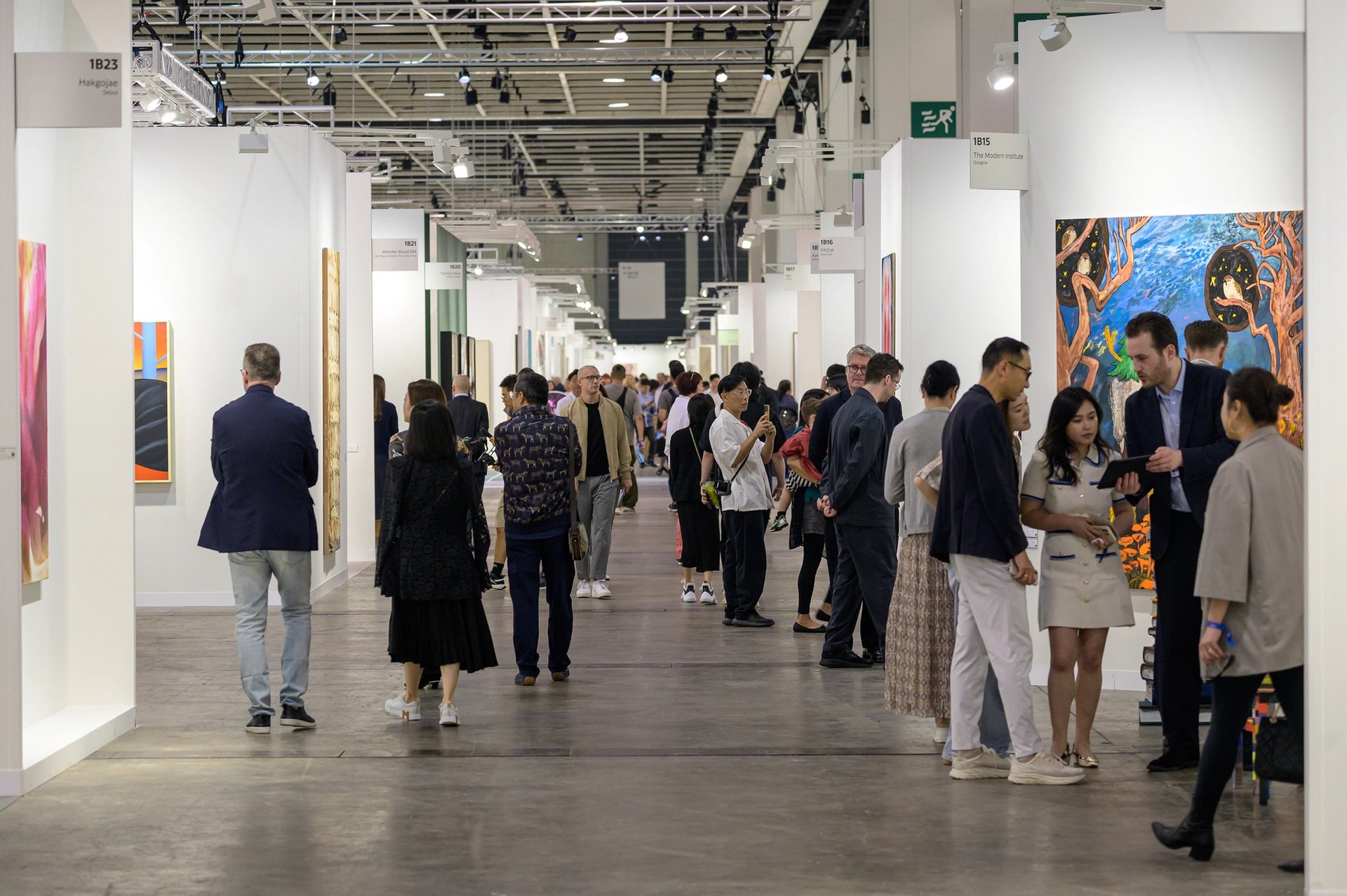
Mainland China spending at Art Basel Hong Kong has not returned to the level seen during the 2010s boom © Art Basel
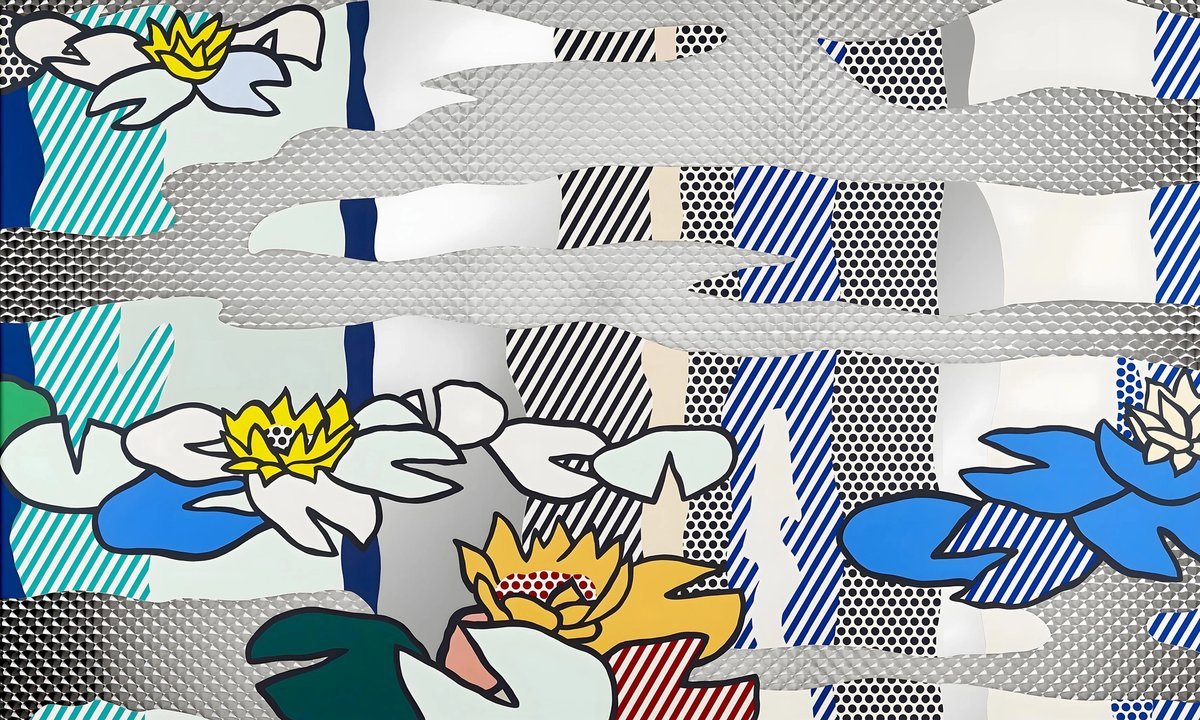
Many entered with trepidation. “Admittedly, ahead of the fair we weren’t sure how it would go,” said Thaddaeus Ropac in a statement. His gallery reported $7min sales on the preview day, including Georg Baselitz’s 2010 painting Luise, Lilo, Franz und Johannes for €1.2m, while a 1992 enamel on silver work by Roy Lichtenstein sold on day two for $1.5m.
Restrained approach
The presence of new collectors may have helped to revive some of ABHK’s pre-pandemic vigour, but it has also emphasised how much has changed since the massive sales and frenzied energy of China’s 2010s boom. Spending from the mainland, the driving force of that phenomenon, is still down: reports from numerous gallerists of less Mandarin being spoken at their stands is matched by the latest auction data for that region, where sales dropped by 41% in 2024, according to a recent ArtTactic report.
But signs of recovery are visible, albeit in a more restrained approach than before. Among the top reported sales from the first VIP day were a large-scale new painting by Michaël Borremans, Bob (2025), which sold at David Zwirner for $1.6m to the Corridor Foundation in nearby Shenzhen. The gallery also said it sold a Yayoi Kusama Infinity Net painting for $3.5m, the most expensive reported sale on day one.
Second- and even third-generation mainland Chinese collectors are increasingly in the mix and, according to the fair director Angelle Siyang-Le, the number of China’s Gen Z art buyers is “growing exponentially”. Shanghai’s Studio gallery, a first-time exhibitor, is showing a solo presentation of sculptures by Wang Yuyu. The gallery received “an overwhelming number of inquiries from collectors” and sold “some big pieces”, says its director Celine Zhuang. She adds that collectors “appeared more relaxed, no longer rushing to snap up works as urgently as before”.
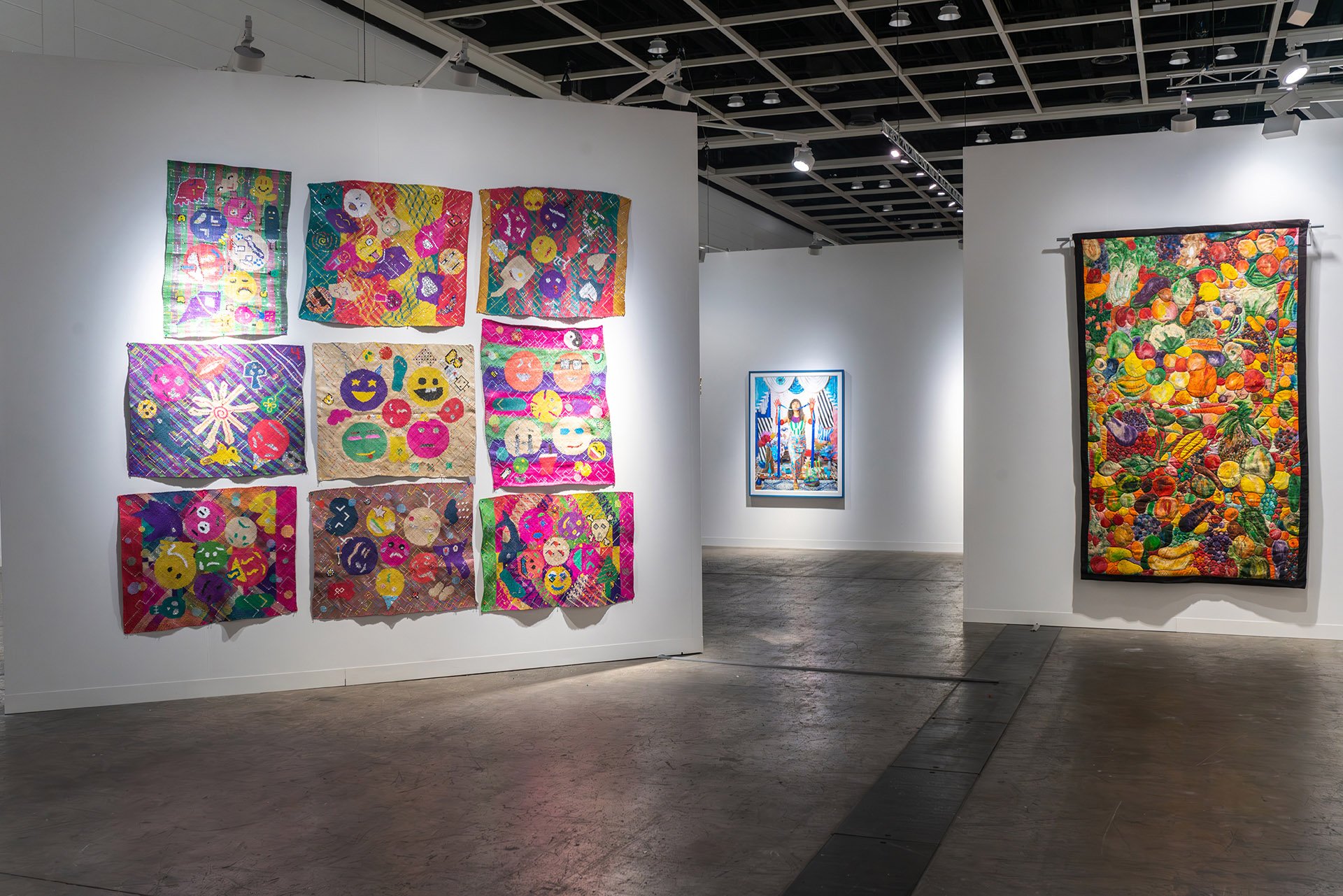
Stalwart gallery Silverlens, from Manila, has a stand at this year’s fair; visitors from the Philippines and Singapore have been out in force Courtesy Silverlens (Manila/New York)
Daniele Balice, the founder of the Paris gallery Balice Hertling, says that by the end of the preview day he had sold most of the solo stand of the Shanghai artist Zhi Wei, whose diaphanous paintings are offered for €17,500 each. “We were hesitant, but today went well. Our expectations were non-existent—everyone’s are these days. But today has reassured me, I will return.”
China’s lesser impact this year is met by fewer American collectors in attendance than usual, as well as fewer US exhibitors, especially those selling post-Modern blue-chip work, such as Edward Tyler Nahem and Helly Nahmad, who did not return. Most notable is the absence of Lévy Gorvy Dayan, a longtime ABHK exhibitor, which in its 2018 edition sold a $35m Willem de Kooning painting within the first two hours of opening—still to date the most expensive work sold at the Hong Kong fair. Last summer it closed its Hong Kong gallery after five years.
Meanwhile, Lehmann Maupin has still yet to reopen its space in the city. The gallery reported the sales of 15 works on preview day, all to Asian collectors—mostly from Hong Kong and South Korea—including a large-scale painting by Cecilia Vicuña for $350,000 to $400,000.
Shifting sands
As the two giants of China and the US remain relatively subdued in Hong Kong, other regions are stepping into the spotlight. Chief among them is Southeast Asia, a region that was once a vibrant collecting force in Hong Kong decades ago but became overshadowed during the Chinese boom.
“Singapore and the Philippines have tracked significantly higher attendance rates,” Siang-Le says. Galleries taking part from the region include CityCity from Bangkok and the stalwart Silverlens from Manila. The region’s growing institutional infrastructure was also highlighted this week, with an event thrown for Bangkok’s forthcoming Dib museum, due to open this December.
But Southeast Asian buyers, along with those from Japan and Taiwan—two other regions that are increasingly prominent at ABHK—are yet to develop a critical mass. We are laying the ground for an infrastructure, which is getting there,” says Jun Tirtadji, the director of Jakarta’s ROH gallery. Accordingly, many dealers will still not bring their top-notch works, which are instead reserved for European and US fairs. At the stand of Acquavella, a Francis Bacon painting is being offered for $22m, but the gallery has already exhibited it at previous Art Basel fairs.
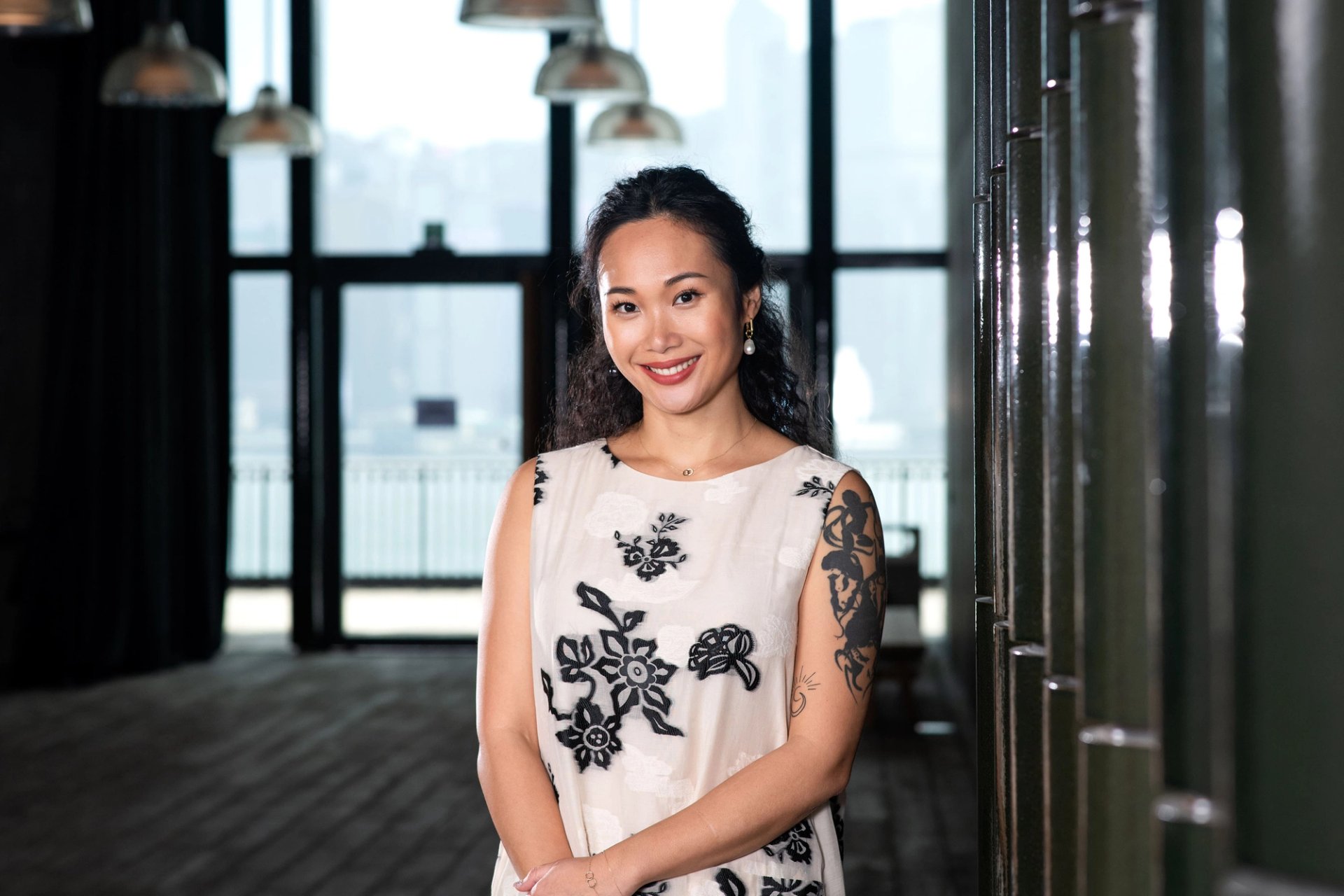
Angelle Siyang-Le, Art Basel Hong Kong’s director, notes that the number of China’s Gen Z art buyers is “growing exponentially” Courtesy Art Basel Hong Kong
Speaking anonymously, a Hong Kong adviser says that Asian collecting, especially in China, might be soft at present due to wider economic headwinds, but that this is becoming a “self-fulfilling prophecy” because “top works aren’t being brought to the region”, which is home to an “increasingly discerning” collector base. “Galleries will be rewarded for bringing their A-game.”
A highlight of this year is Louise Bourgeois’s Cell (Choisy Two) (1995), a sculpture of the artist’s childhood encased in an austere and imposing metal cage. Of the 40 or so Cell works in existence, few are left in private hands today, with most owned by the world’s leading art museums, including the Tate, Centre Pompidou and MoMA. The work, on sale for $7.5m, is the prime Bourgeois work being offered by Hauser & Wirth at both its stand as well as the solo show of the artist in its Hong Kong galley. It is timed to coincide with Bourgeois’s travelling museum show, with Asia stops including Tokyo and Taipei.
This tour is itself a recent phenomenon “that wouldn’t have happened ten years ago”, says the gallery’s president Marc Payot, adding that bringing this work is “testament to how seriously the gallery takes this region”. While Hauser & Wirth placed a smaller Bourgeois sculpture for $2m with an Asian collector at the preview, by the end of the second day, the Cell work had yet to be sold. Payot, fittingly, takes a measured approach, and says that this slower pace is indicative of a new phase of collecting, one that is “more considered. These things should take time.”
[ad_2]
Source link