
[ad_1]
In 2024, nearly $7.7 billion less was spent on art than the year before, that’s a 12% drop in global sales, according to the latest Art Basel and UBS Art Market Report. Despite this, the overall number of transactions increased by 3%.
So activity and appetite haven’t fallen, but increased. Spending is down, yes, but participation is up.
The market isn’t shrinking, it’s shifting. Buyers are buying differently. The market is actually moving fast. Not collapsing. Reconfiguring.
Sign up to Money Morning
Don’t miss the latest investment and personal finances news, market analysis, plus money-saving tips with our free twice-daily newsletter
Don’t miss the latest investment and personal finances news, market analysis, plus money-saving tips with our free twice-daily newsletter
The 12% global decline is largely driven by China’s 31% drop. A $3.77 billion contraction in one region accounts for nearly half the total global fall.
The global 12% decline isn’t evenly distributed, it’s front-loaded. If we were to strip that single figure out, what remains is perhaps a quiet reconfiguration: energy redistributed into smaller segments, younger buyers, and more intimate transactions.
So we don’t know how much of what we’re seeing is real, and how much has been distorted by that c. $4 billion rupture in China. The rupture itself was driven by a spike in non-payment – up 41% in China in 2024 – leaving billions in agreed sales unpaid.
Was the China drop so severe that it threw off the initial dataset? And did UBS fully account for that before drawing conclusions about things like buyer age, artist profile, price brackets? I haven’t yet had a chance to check this with UBS, and there’s certainly no accusation, but I think the question is worth asking.
Excuse me if I’m misunderstanding how these reports are consolidated, I’m not an analyst, but when non-payment is this widespread, it starts to raise structural questions. If a sale was originally recorded at auction, but the payment never arrived, was that sale removed everywhere it appeared? Can we still trust the reported increase in younger buyers, or were those figures partly driven by sales that later defaulted? Can we still rely on the price bracket analysis, or were those numbers also shaped by transactions that never completed?
All this underscores the risks represented by the art market’s lack of regulation. Money, value, and intent can move through it without friction, oversight, or traceability, leaving the market open to both exploitation and corruption (through laundering). This is why art companies sometimes draw sudden institutional scrutiny, with banks freezing accounts or HMRC launching reviews. But this same lack of regulation is also what makes the system vulnerable to something else now playing out in real time: people agreeing to buy artworks, then not paying.
Trust is the basis of all relationships, not just in the art world. The global art market fundamentally relies on trust because it’s unregulated. In most regions, that trust still holds. But in China, it’s broken down. And when trust collapses in an unregulated system, the surrounding structures – legal, financial, cultural – can’t intervene. They’re not designed to. There’s no enforcement mechanism. No fallback. Just collapse. The financial rupture is a symptom of something deeper: a collapse in trust that threatens the stability of the unregulated nature of the market.
Perhaps this is an indictment on the zeitgeist more generally – culturally, we’re less accountable. There’s more anonymity, less traceability. People can write a terrible comment online and then disappear. The shift is psychological, relational. It’s not just the market, it’s the culture.
In the West, defaults are rare and taken seriously. In China, their rise signals something more serious: a market teetering on the edge of credibility.
Christie’s, Sotheby’s, and Phillips have already been scaling back. Christie’s cancelled its spring Hong Kong auction in 2024. Sotheby’s and Phillips have reduced the size and ambition of their China-based sales. Several Western auction houses are shifting their focus back to New York, London, and Paris, where enforcement is clearer and buyer confidence is stronger.
The rationale for further retreat is clear. A market where sales don’t convert to payment isn’t just unprofitable, it’s reputationally dangerous. You can’t afford defaults on top lots. You can’t build long-term confidence in a system that doesn’t honour its own transactions.
At this scale, non-payment destabilises everything: consignors lose faith, buyers hesitate, brands erode. And without regulation, when someone defaults, no authority steps in.
Unless something changes structurally in China, it’s likely that major Western houses will keep retreating from the market.
The art market thrives on discretion – prices, buyers, terms – much of it stays hidden. That makes it easier for buyers to overcommit, delay payment, disappear, or even use non-payment as a post-sale tactic.
Enforcement is left to individual institutions. Each auction house or gallery is responsible for chasing its own defaults. There’s no collective mechanism. No shared blacklist. A buyer can default in one place and keep bidding elsewhere.
Buyers’ behaviour is changing
Happily, and it strikes me this is no coincidence, there’s a recalibration happening lower down the market, where relationship remains at the centre: more sales at lower price points, more activity in quieter corners.
Sales of work under £5,000 are up 13%. Smaller dealers – those with annual turnover under $250,000 – saw a 17% rise. And that figure matters, because it’s structurally trustworthy. These are relationship-led transactions: the kind where you agree to the deal, transfer the money, and the work changes hands. There’s little scope for non-payment. The relationship itself holds the exchange.
If the numbers can be trusted, there’s a shift happening – more young and new buyers are entering the market, and they’re not chasing big names or big prices. They’re finding work in smaller spaces, with emerging artists, through personal relationships and quieter transactions. The energy is moving away from spectacle and towards substance.
At the top end, the landscape is radically shifting. Take Marlborough Gallery, who closed in 2024 after nearly 80 years – not just a big gallery, but one known for exactly what the market claims to value now: long-term relationships, depth, trust, intimacy. And still, it didn’t survive.
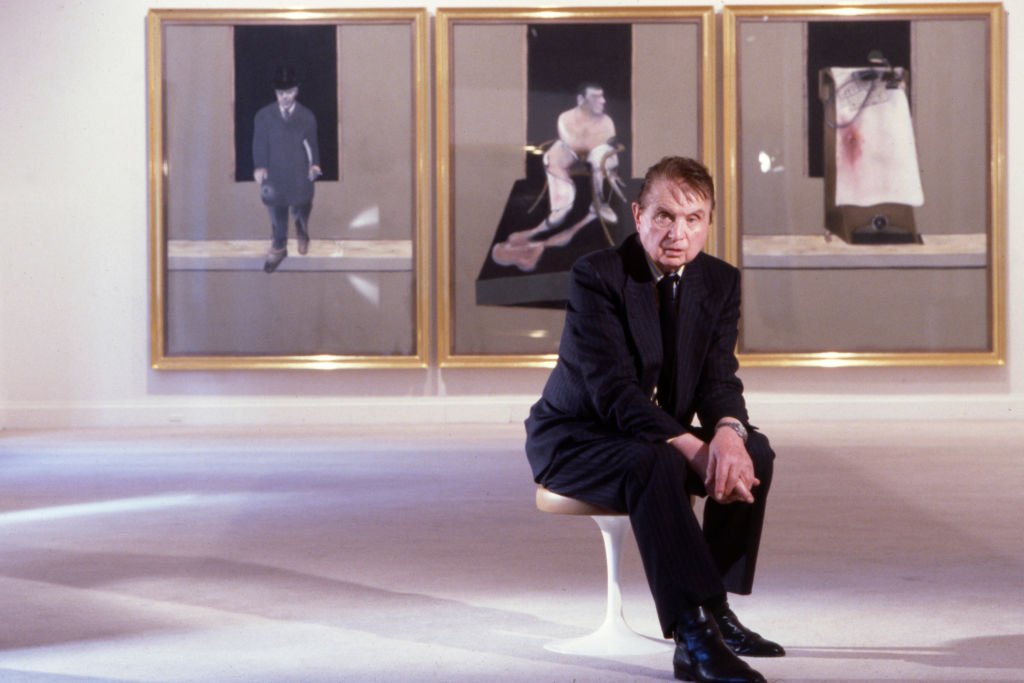
Founded in 1946, Marlborough helped shape post-war British art. It represented Francis Bacon, Lucian Freud, Henry Moore, Frank Auerbach. Its legacy is inseparable from the evolution of modern British painting.
What distinguished Marlborough was its commitment to personal relationships with artists. This wasn’t a depersonalised gallery chain, it was a gallery built on trust and continuity. That it couldn’t sustain itself in today’s market points to something deeper: a structural shift in how art is sold, and what is seen as viable.
Marlborough’s roster included not only the giants, but also contemporary artists like Maggi Hambling and Catherine Goodman. Just months before closing, they signed Lorena Levi – an emerging artist we introduced to the market. They weren’t winding down. They were reaching forward.
Marlborough’s closure isn’t just one gallery shutting its doors. It marks a broader transformation. The market is shifting toward more intimate, relationship-based transactions – often at lower price points and outside traditional gallery systems. That decentralisation challenges legacy structures and forces a reassessment of how art is bought, sold, and valued.
In this context, Marlborough’s end becomes a marker of change. Even the most established institutions must adapt, or risk being left behind. Maybe some got too big. Maybe they lost the human thread.
What’s clear, whatever the reason, is that the momentum is now elsewhere. With smaller dealers. Younger artists. Quieter transactions. People want something human. And maybe it’s no surprise that people are turning to smaller dealers, quieter purchases, places where they can shake someone’s hand. Because when the relationship disappears, anonymity creates space for people to act without accountability. And as we move headlong into an AI-shaped world, that desire may only grow.
This article was first published in MoneyWeek’s magazine. Enjoy exclusive early access to news, opinion and analysis from our team of financial experts with a MoneyWeek subscription.
[ad_2]
Source link