

[ad_1]
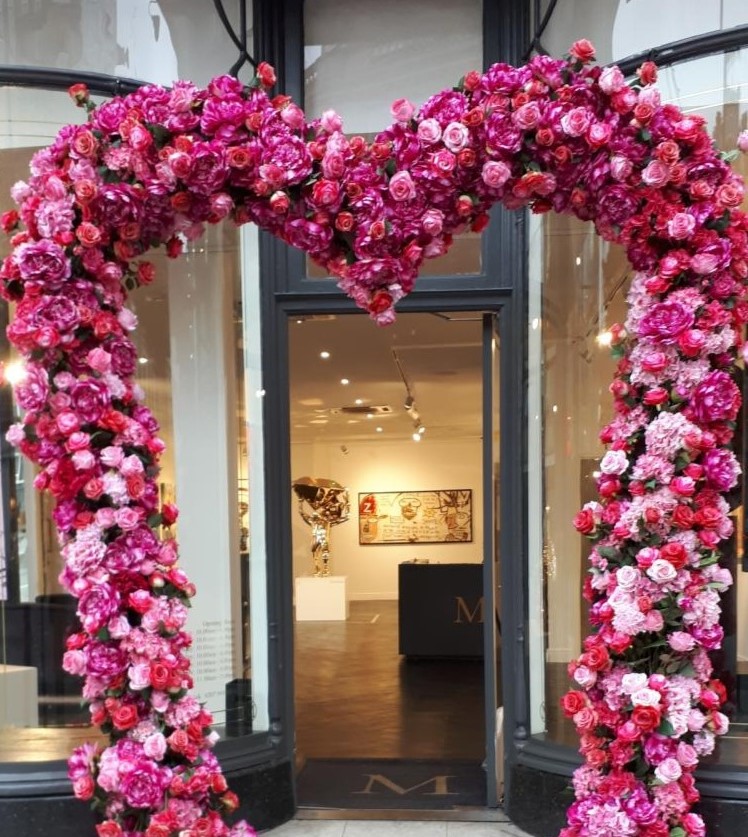
After US President Donald Trump imposed sweeping tariffs on exports to the US, causing stock markets to plummet, the UK art market offers investors a bright spot compared with traditional asset classes.
UK exporters are increasingly worried about new tariffs imposed
by US President Donald Trump on exports to the US, highlighting
how traditional markets are vulnerable to geopolitical shocks.
However, the art market appears to be exempt from such
levies.
Under the new rules, a 10
per cent base tariff will affect a range of UK
exports.entering the US. But UK artworks – including paintings,
prints, photos, and sculptures – are currently classified as
“informational materials” and are exempt from these tariffs,
according to the art advisory service at Maddox Gallery for
contemporary art in London.
“This places UK-based artworks in a uniquely powerful
position. Works by Damien Hirst, David Hockney, Bridget Riley,
Banksy, and Tracey Emin are fully exempt – regardless of where
they’re shipped from – thanks to the UK origin classification,”
Maddox said. Other alternative assets such
as handbags, watches, sneakers, and
furniture are now subject to tariffs, which is reflected in
market sentiment.
With art having the lowest correlation to traditional asset
classes such as stocks and bonds, people are increasingly
viewing art as a viable form of alternative investment. Buying
art also allows firms or individuals to make tax savings. There
are various UK tax incentives which allow art amassed during
a lifetime to pass to future generations in a tax-efficient way.
The UK’s Acceptance-in-Lieu scheme, which Arts Council England
administers, allows a taxpayer who has an inheritance tax bill or
one of its earlier forms, to pay the tax by transferring
artifacts which have a cultural and historical significance. The
UK Cultural Gifts Scheme also offers tax incentives for taxpayers
willing to gift artworks for public benefit.
Maddox highlighted that art has also
proven historically resilient during
economic downturns. “During the 2008 financial crisis, while
global equities plummeted by 46.1 per cent, Damien Hirst’s
Sotheby’s auction defied the trend, raising a record-breaking
£111 million ($142 million),” Maddox said.
The ninth edition of The Art Basel and UBS
Global Art Market Report 2025 also shows that the UK regained
its position as the second-largest market with an 18 per cent
share in 2024 as sales reached $10.4 billion, although down 5 per
cent on 2023. Transactions rose globally by 3 per cent to 40.5
million in 2024, showing continued dynamism particularly in
lower-priced segments, the report reveals. Looking ahead to 2025,
80 per cent of dealers expected stable (47 per cent) or improved
(33 per cent) sales. Optimism was highest in the middle market,
with those hoping for increasing sales in the $500,000 to $1
million segment up – from around a third at the end of 2023
to 51 per cent at the end of 2024.
Art exhibitions are also increasingly sponsored by financial
institutions such as the Royal Bank of
Canada, Bank of America
and Deutsche
Bank to enrich people”s lives and help communities prosper.
RBC’s own art collection consists of more than 5,500 works in
over 30 locations across Canada, and key locations globally. The
collection is geared towards the work of emerging artists,
with select acquisitions by mid-career and senior artists. Each
year, the RBC Foundation donates millions of dollars to hundreds
of global arts organisations to give more help to emerging
artists to establish their careers.
[ad_2]
Source link