
[ad_1]
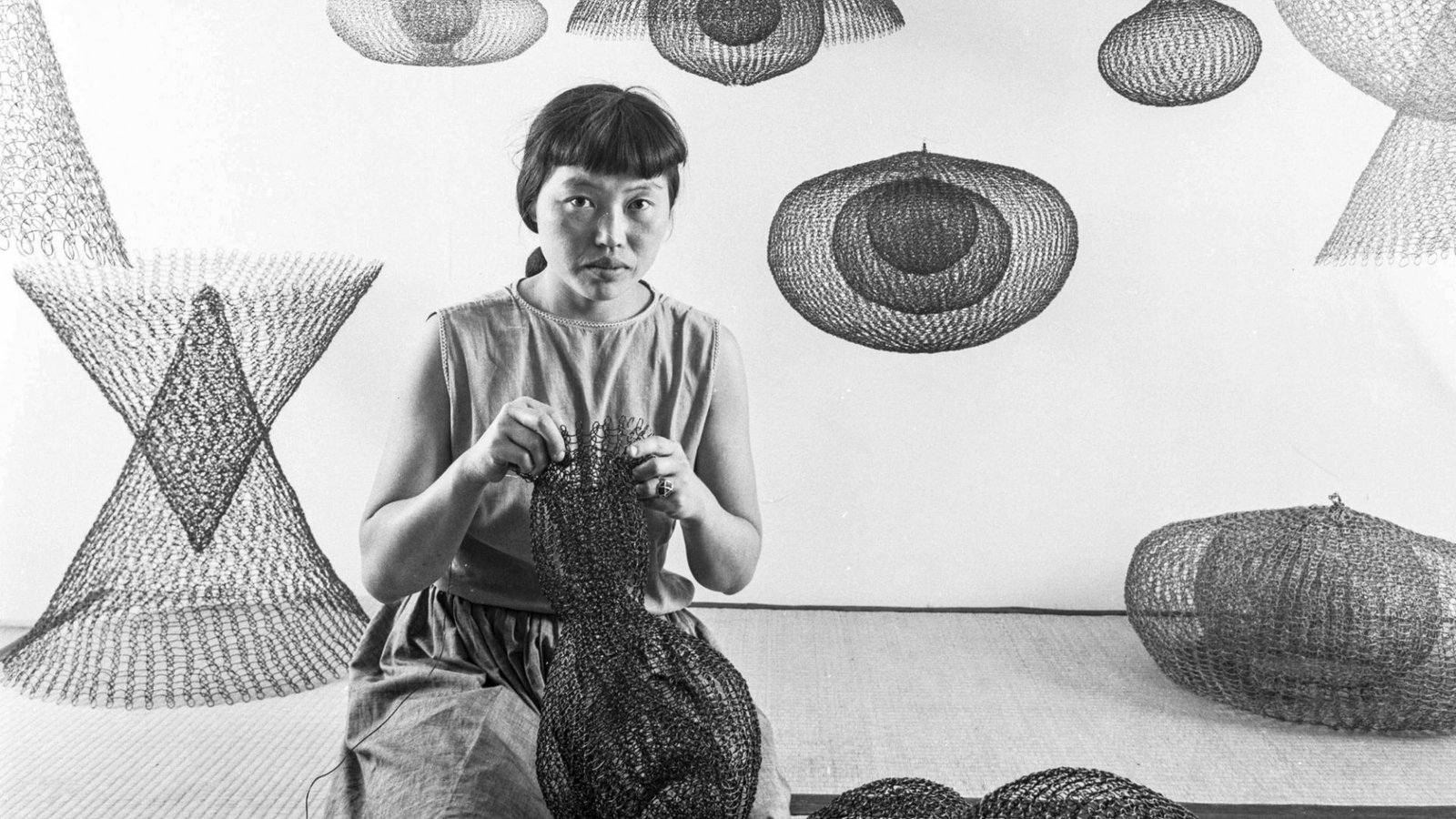
Ruth Asawa’s first breakthrough came in a market in Toluca, Mexico. It was 1947, and the Californian was 21, working in the city as an art teacher. Then, on a shopping trip, she was transfixed by chicken-shaped looped-wire baskets, used by vendors to hold eggs.
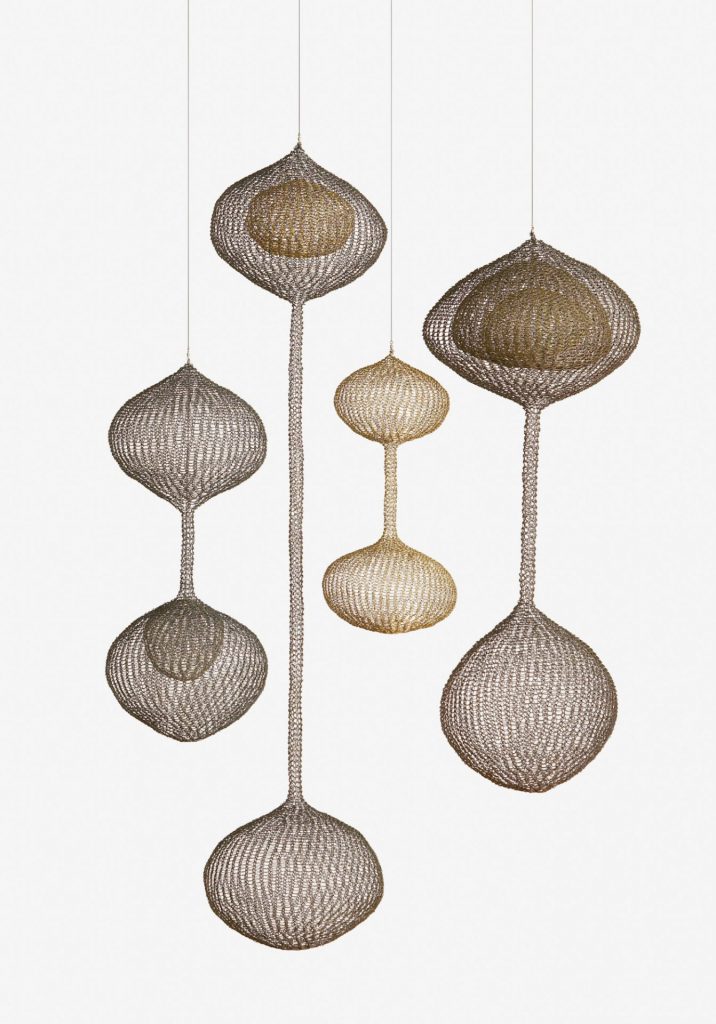
A fellow teacher taught her the technique of how, using one long continuous piece of wire, you could “knit by hand without the use of needles or hooks”. Asawa experimented, tightening the looping and reversing the direction, to produce abstract sculptures in multifaceted single, double and triple-looped wire shapes. She suspended her sculptures from the ceiling. It was the foundation of Asawa’s career as a professional artist.
The second breakthrough, sadly, came after Asawa’s death in 2013, aged 87. In the intervening years, her international reputation has grown. Not to an extent where her centenary will outshine some of the others being marked this year – from Marilyn Monroe to John Coltrane, from David Attenborough to Miles Davis – but the 100th anniversary of her birth is now considered notable enough for major retrospectives to be held in the USA, at the San Francisco Museum of Modern Art (SFMOMA) and the Museum of Modern Art, New York (MoMA) and now in Europe, at the Guggenheim Museum in Bilbao.
Asawa’s prolific body of work, involving sculptures, paintings, works on paper, and public pieces created over six decades, can be traced to the work ethic instilled in her youth. She was born Ruth Aiko Asawa, to Japanese parents, immigrant farmers living and working on a leased farm in Norwalk, around 17 miles east of Los Angeles, on January 24, 1926. As immigrants, under the California Alien Land Law they were not allowed to own land.
Asawa was the fourth of seven children and they all worked on the farm. Her childhood memories were getting up and dressed for manual work in the fields before breakfast, then changing clothes for a school day, before returning home, to change again, to work in the fields until dark. She recalled, “I had two lives… one as a schoolgirl and the other as a farm worker”.
On December 7, 1941, at the age of 15, those lives changed when Japan bombed the American military base at Pearl Harbor, Hawaii. In the aftermath, Asawa’s father, along with other Japanese male immigrants, was sent to an internment camp in Lordsburg, New Mexico. Two months on, in April 1942, Ruth Asawa, her six siblings and her mother were incarcerated at an internment camp housing 18,000 people on a repurposed thoroughbred race track in Santa Anita.
The smell of horse dung never left her memory, but Asawa recalled that it was the first time in her life that she had not had to work. Without access to education in the camp, interned Japanese college students set up classes to help younger children. Internees included three Disney Studio artists – a cartoonist, a backdrop painter and an animator – teaching their skills. Asawa, a gifted artist at school, was taught to draw from life, spending six hours a day learning foreshortening, and proportion, to discover, she said, how an artist worked.
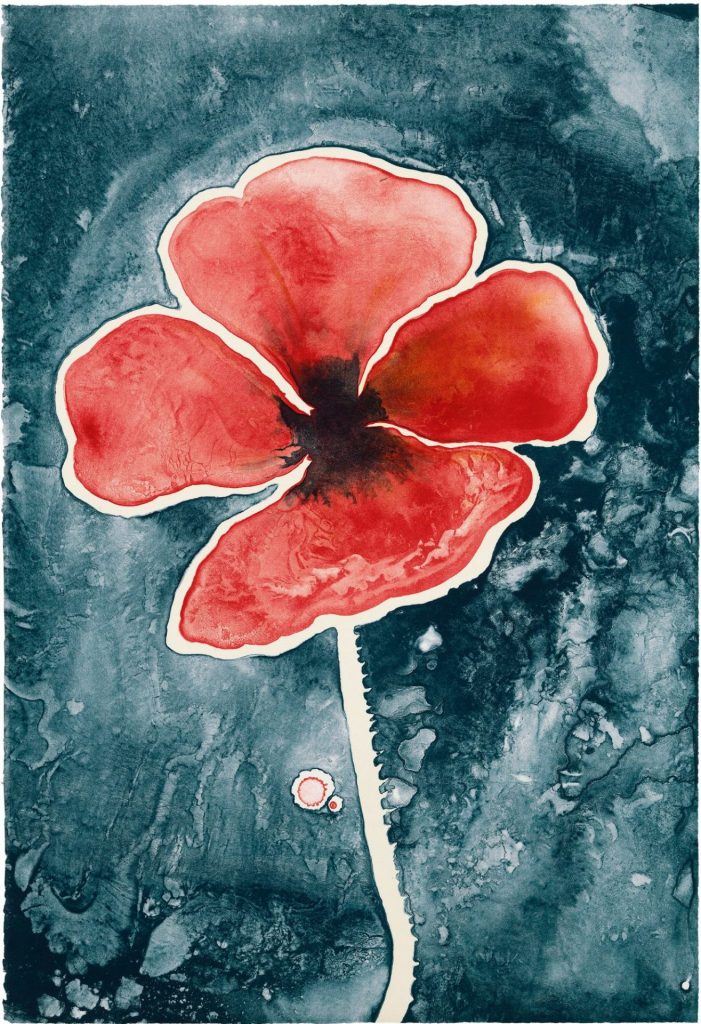
1965
Asawa wanted to be an art teacher but her application was rejected due to negative sentiment against the Japanese. Then, in 1946, through friends’ encouragement and a loan, she secured a place at the experimental, interdisciplinary Black Mountain College (BMC) in North Carolina, to study art.
Classes included dance – her favourite – studying with Merce Cunningham in 1948, as well as philosophy, music and mathematics. Her painting tutors included the Turkish-born American Jean Varda, while German artist and former Bauhaus tutor Josef Albers taught her design and colour.
She recalled that from Albers she learned to “draw what you see, not what you know”. His drawing classes concentrated on works on paper and repetition, resulting in Asawa’s remarkable paperfolds.
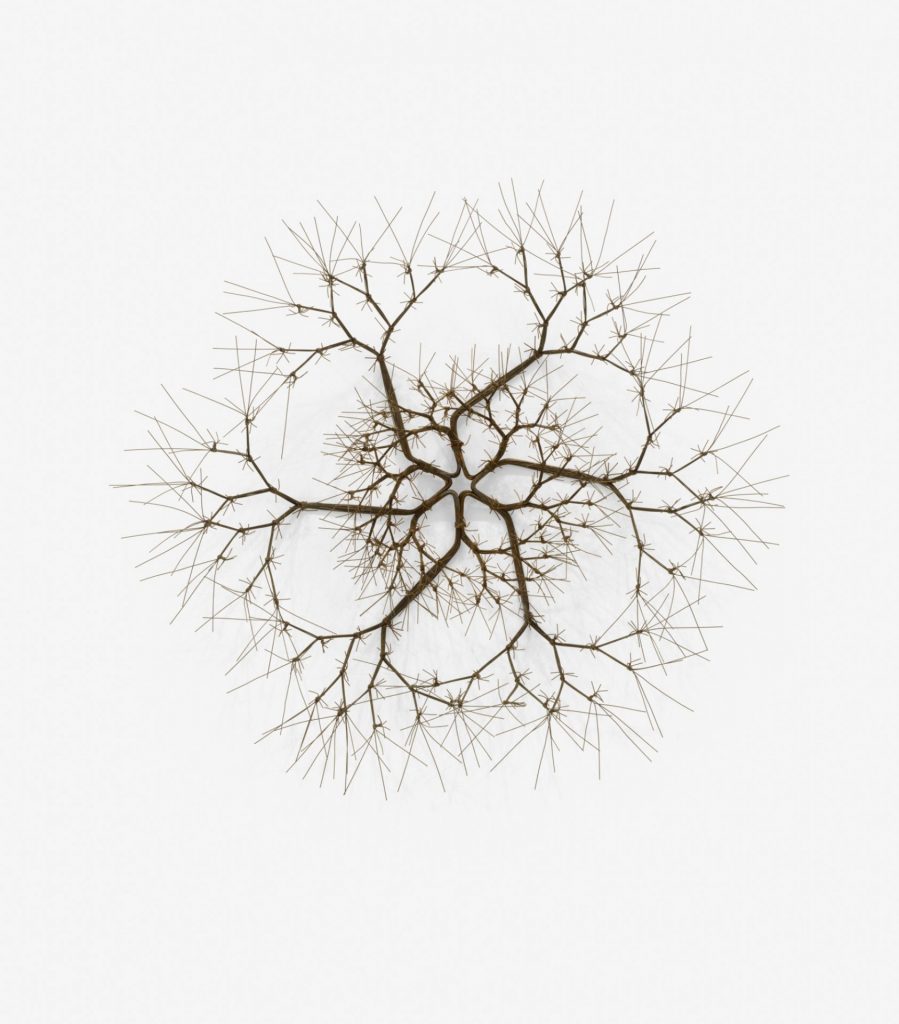
The Guggenheim retrospective begins with early works that explore her interest in natural forms and organic materials, like the leaves that appear in drawings and paintings. There are apple and potato prints, and nature-inspired tied-wire pieces.
In 1952, Asawa adopted the phrase “continuous form within a form” to describe her art aesthetic. By now, it described folded paper sculptures, line drawings, watercolours, paintings, and the modular looped-wire works, shaped from spheres to trumpets.
Asawa said that her work required a “total act” of seeing, to experience the positive and negative spaces within a piece. “You can show inside and outside, and inside and outside are connected,” she said. This can be seen in her paintings too, like the 1948-49 “dancer” series, where foot shapes become colourful abstract forms. “Everything is connected, continuous”, she explained.
From 1949, Asawa lived permanently in San Francisco with her husband, Albert Lanier, a fellow BMC student and architect. Using her house as both home and studio space, she developed her art, integrating the home life of their six children – born 1950-59 – with the work she created.
Photographs show the interior filled with suspended looped-wire sculptures, and her children helping to mix paints and dough. “I wanted my children to understand what I do,” she said. Her professional success led to her founding the Alvarado School Arts Workshop in 1968, and the San Francisco School of the Arts, in 1982, underling her mantra of learning by doing.
Contracting lupus in 1985 slowed Asawa down but did not curtail her ambitions. In 1995 she set up the Ruth Asawa Fund, a non-profit organisation to promote arts education.
In California, Asawa’s many public works are her legacy. Fabulous origami bronze fountains (1975-76) reflect the folded paper she created at BMC. For another, she invited more than 250 San Francisco residents, young and old, to create a vision of their city. The San Francisco Fountain (1973) in Union Square was transformed from their bread dough shapes into bronze, to be “touched, loved and patted”.
Across the Atlantic, the Guggenheim retrospective illuminates Asawa’s huge talent in an exploration of a life dedicated to work and family. It is a revelation.
Ruth Asawa: Retrospective is at the Guggenheim Museum, Bilbao, Spain until September 13, 2026
[ad_2]
Source link