
[ad_1]
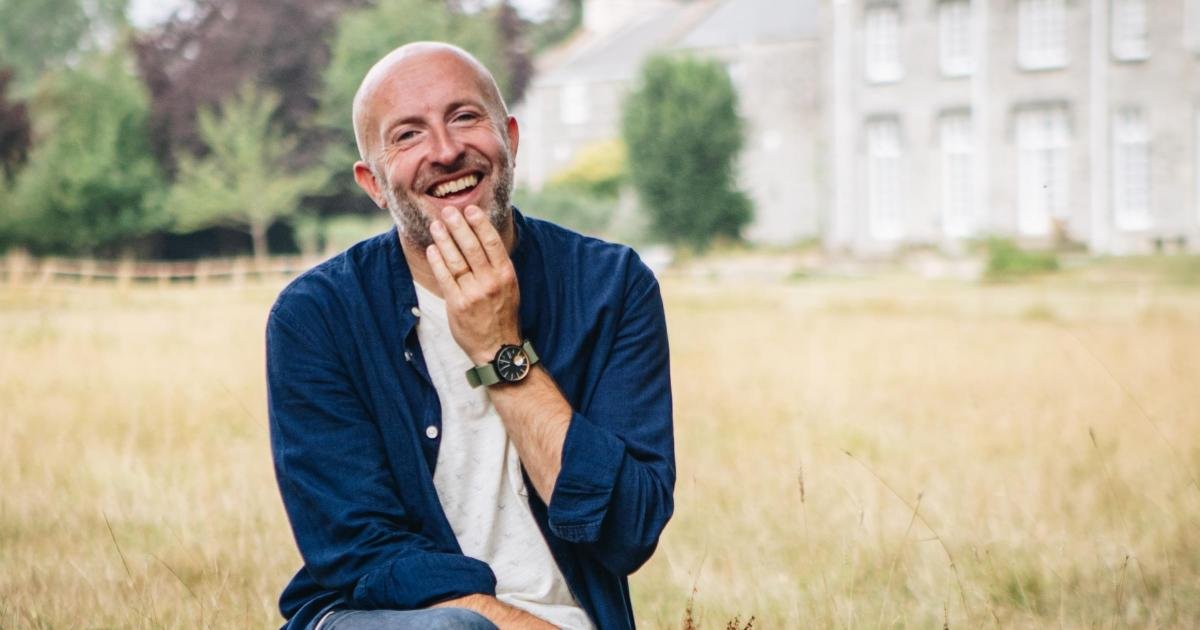
As artists across the county prepare to open their studio doors for Dorset Art Weeks, we catch up with creative director Paul Newman to find out what makes it such a special moment in Dorset’s cultural calendar
What first drew you to Dorset Art Weeks?
I was brought in to produce the 2022 event, just as things were beginning to recover after Covid, having previously worked on Somerset Art Weeks. It felt like a natural step, especially as I’d recently moved back home to Dorset. Then in 2023, after Jem Main retired, I was asked to take on the role of running Dorset Visual Arts, the charity behind the event.
You’re also an artist yourself. Can you tell us a bit about your work and how Dorset has shaped it?
My connection to the area really goes back to childhood, when we moved to Poole. I went to Poole Grammar School, did my foundation at Shelley Park in Boscombe, and later studied at Falmouth University.
As a teenager, I’d often cycle down to Sandbanks Ferry, cross over to Purbeck and spend the day exploring and drawing. I was always more interested in the quieter, less obvious places – following Ordnance Survey maps to see what lay beyond the marked paths. That curiosity led me to places like Winspit Caves, Tyneham and Chapman’s Pool.
I owe a lot to my art teacher, Rob Mouzer, who really instilled the importance of discipline and regular practice – life drawing, working en plein air, that kind of thing.
I mainly work in graphite and I’m drawn to the details of the natural world – trees, birds, rock formations and the movement of water. Because everything is monochrome, it’s all about texture, tone and subtle shifts in light. Sometimes I’ll introduce traces of human impact into those landscapes too. A recent project, Concrete Castles, looked at Second World War defences. That took me back to Studland Bay – Fort Henry, the Dragon’s Teeth – and sparked a lot of reflection on how the coastline has changed over time.
I’m also lucky enough to be a member of both the Society of Graphic Fine Art and The Arborealists.
Dorset Art Weeks has become such a fixture in the calendar. Why do you think it’s endured?
It works so well here for a number of reasons. Dorset’s landscape is incredibly varied and it offers endless inspiration – often in places people might not immediately think to visit. That sense of discovery is really important.
But more than that, Dorset Art Weeks gives people a chance to see what goes on behind the scenes, to understand how an idea develops and becomes a finished piece. It’s a very different experience to seeing work in a gallery.
It’s also wonderfully flexible. You can map out your own route, make a day of it (or a weekend), and combine art with a bit of exploring, good food and time outdoors. Dorset is a big county, but it naturally breaks into manageable pockets, so you can really get a feel for each area.
How would you describe the artists who take part?
It’s a real cross-section, from established names to emerging talent, but there’s definitely a shared sense of pride in being part of Dorset’s creative community.
This year feels particularly exciting. We’ve launched a new website to make it easier to plan visits and we’re moving to an annual event, which opens up a lot more opportunities for artists, venues and organisations to get involved.
We’re also seeing more work that responds to the environment and our relationship with it, which feels very timely. And because the event stretches right across the county, from rural Dorset to Bournemouth, Christchurch and Poole, you get a real range of voices and perspectives.
Open studios are at the heart of it all. Why do you think they’re so appealing?
There’s something special about seeing where the work actually happens. The process can be just as fascinating as the finished piece.
In a gallery, you don’t often get to meet the artist, but here you can have a conversation, ask questions and get a real sense of the thinking behind the work. It makes the whole experience feel much more personal.
It’s also very accessible – most venues are free – and for artists, it’s a valuable opportunity to connect with people, build an audience and share what they do.
What do people take away from Dorset Art Weeks?
It’s incredibly rewarding to see the impact it has. Visitors often come away inspired, sometimes even encouraged to start making work themselves. For artists, it can be just as important: the feedback, the conversations, the connections. It can be quite a solitary way of working, so that sense of engagement really matters.
With so much to see, what’s your top tip for visitors?
Pick up a guide or have a look at the website and plan a rough route but don’t rush it. Leave time to stop, chat and really look at the work. There’s an amazing breadth of talent across Dorset, and it’s worth taking the time to enjoy it.
Are there any artists or studios you’re particularly excited about this year?
There’s so much to see across the county, but a few highlights include:

North East
Group 7 at The Slade Centre, Gillingham
Ruth Readman and Sarah Turnbull
Dave Webster
East
A number of organisations are taking part for the first time this year, including Museum of East Dorset, Coda Music and Arts Trust, AUGER Collective, Ferndown Arts Society, Poole Lighthouse, Poole Museum, and Poole & East Dorset Arts Society

Purbeck
Peter Joyce
Mowlem Theatre (Jessamy Hawke and Emma Scattergood)
Swanage Water Works
Rufus Knight-Webb

South
Joy Trpkopvic and Jane Kirby (White Nothe Cottages)
Upwey Potters
Art at the Vineyard (Langham Wine Estate)

West
Lisa Lindqvist and Carol Krosnar
Frances Hatch at Bridport Arts Centre
Jools and Guy Woodhouse
Helen Garrett and Gigi Sudbury
Lower Hewood Farm – featuring Chantal Powell, Gunner la Cour and Lucy Stein

North West
Loxtree Three (Bella Snow, Giles Gibbs, Jo Denbury)
Mosaic Collective
Vicky Muenzer-Jones
Charlie Clapp and Charlotte Marshall
Plan your visit
Dorset Art Weeks runs from Saturday May 23 to Sunday June 7, with studios, workshops and exhibition spaces opening across the county. Most venues are free to visit.
For full listings, maps and to plan your route, visit dorsetartweeks.co.uk or pick up a guide locally.
[ad_2]
Source link