
[ad_1]
Floor coverings are a vital part of our lives, whether we protect our feet and floors with traditional dhurries (woven jute or allo mats) or higher end, more designed rugs that we choose carefully for decoration to bring comfort and quality to our living spaces.
However, unlike a painting or a sculpture carefully placed in our homes, carpets do not inhabit the same category of fine art. We do not know the maker’s name, and they are rarely a topic of conversation or a proud acquisition like the fine art we tend to highlight.
Carpets fall into the category of ‘applied arts’ alongside most other products designed for practical use, like ceramics. The ‘fine arts’ include painting, sculpture and architecture, and very occasionally, some crafts.
An inherent discrimination is folded into the separation of these creative activities: in the fine arts there is a recognised author or creator whose name is alongside if not on the artwork itself. For the applied arts the maker is anonymous, though they often made the piece with their own hands, using their creativity and skills — sometimes developed over generations as inherited knowledge —even while their name is not acknowledged.
These distinctions carry social and economic consequences. Fine art commands a higher price, the applied artist is often underpaid, their work thought of as manual labour, leading to unfair wage practices.
Nepal’s carpets are intricate, beautiful, and were famous in the 1990s, particularly in Europe. Germany imported them in vast quantities, supercharging a homegrown industry in Nepal.
That industry was itself an import, the skill of knotting and weaving came in with Tibetan refugees in the 1960s and was formalised into an industry with the help of DftZ, a Swiss government aid project now known as the Swiss Agency for Development and Cooperation (SDC). The industry reached its zenith in the 1990s and then, over just a few years, declined drastically due to accusations of child labour and cheaper manufacturing options in India.
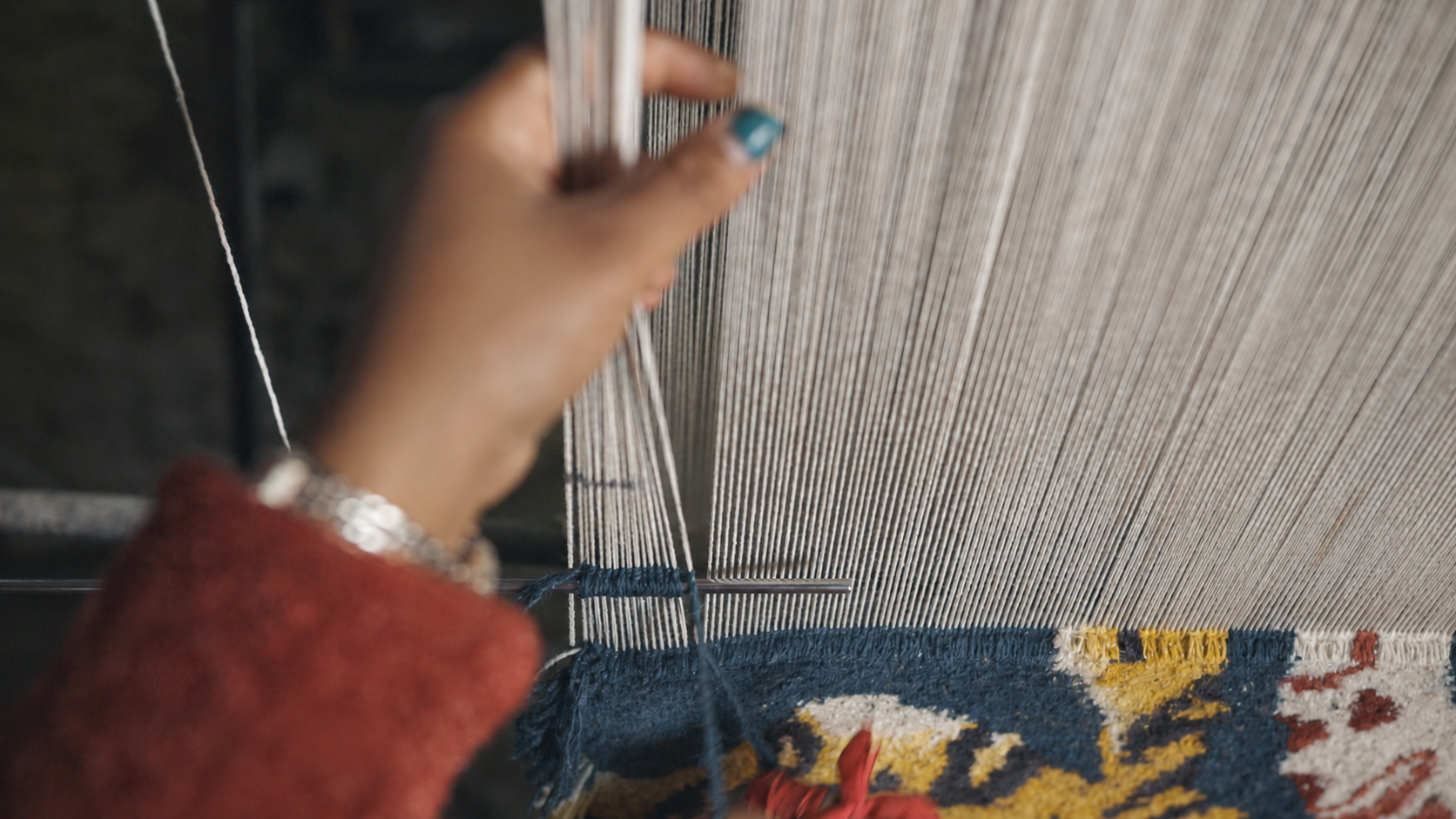
Today, the art of carpet making continues on a much smaller scale in Nepal. When Jigme Wangchuk, whose family has been in the carpet business since the 1970s, began to think about how he might bring attention back to the fine craft of carpet weaving and knotting, he knew he had to do so in a specific, creative way.
Tsherin Sherpa, the American-Nepali artist had been thinking along similar lines to highlight craftsmanship. After the 2015 earthquake, Sherpa returned to Nepal permanently. He was struck by the ravages wrought by the earthquake, particularly on cultural heritage: wood carvings, metalworks and other artifacts made by the fine Newa artisans who have passed these skills down through generations.
Sherpa was also troubled by the distinction made between fine artists and craftspeople or artisans. Over the years since the earthquake, and at the 2022 Venice Biennale Nepal Pavilion (a first for Nepal) he sought to underline the skills required to create repousse and woven works.
MELDED MUDRAS
The resulting metalwork installation of traditional mudras, metal hands and feet melded together alongside a half-woven carpet displaying the warp and weft of the loom, laid bare the complex inner workings of an artwork’s process.
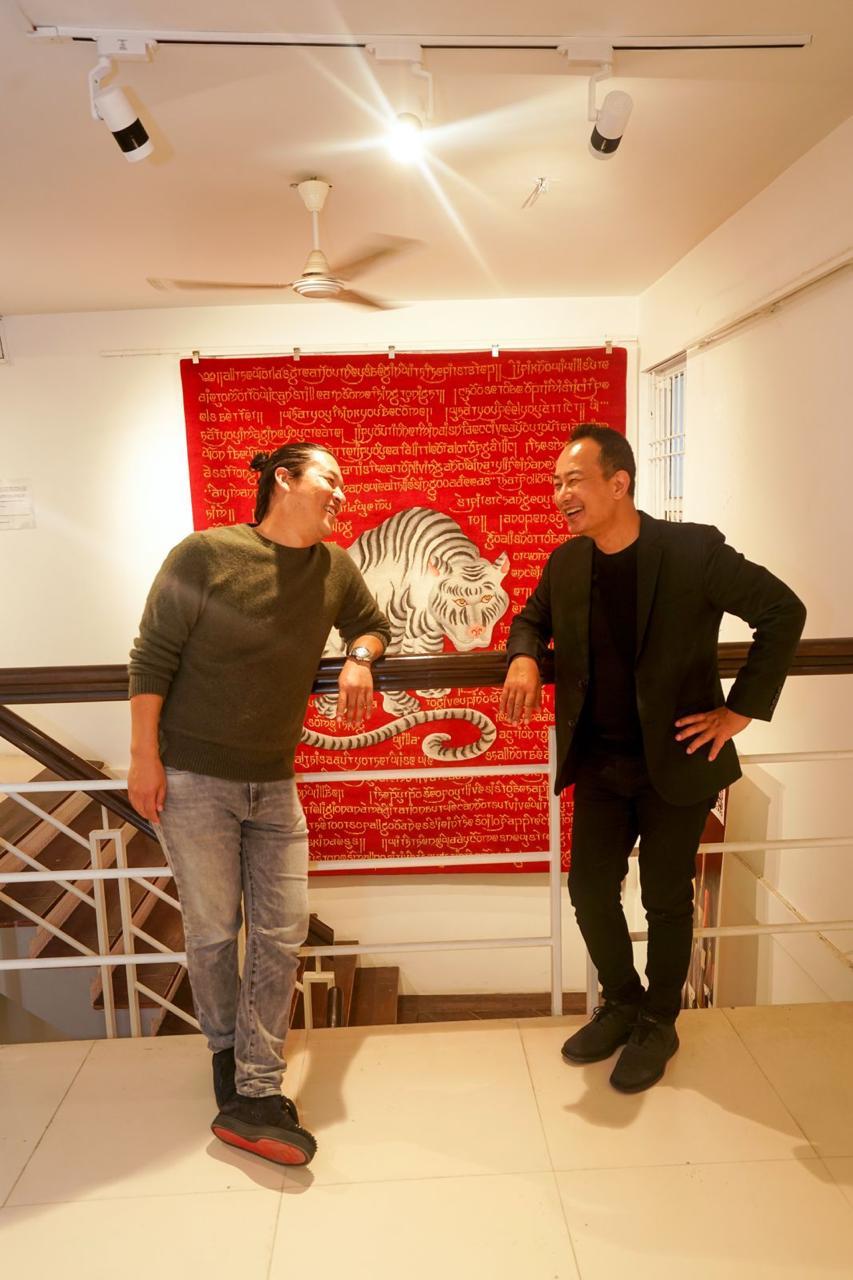
By then, Sherpa and Wangchuk had already met, with the latter extending his ideas to Sherpa for a collaboration, taking Tsherin’s original art and transforming it into limited edition carpets.
Mt. Refuge, a high end carpet house was birthed with the production of exquisite carpets made for the discerning collector.
Since then, the pair’s collaboration has featured in numerous prestigious shows including the Venice Biennale, Art Basel in Hong Kong, in 2024, and now, currently in an exhibition titled Wool.Silk.Resistance at the Museum Angewandte Kunst in Frankfurt that will continue until 14 June.
The exhibition was the brainchild of Katharina Weiler, a German art historian who has worked at the Kathmandu Valley Preservation Trust (KVPT). Familiar with the breadth of Nepal’s arts, and the key role that artisans play in their creation, she chose to highlight the renaissance of carpets as both fine art and works of resistance — particularly against the notion of carpet makers as manual labourers who fulfill the ‘orders of the West’.
The exhibition also includes works by Jan Kath, a German designer, who has a flagship workshop here near Boudha exporting exquisite abstract carpets specially developed by Kath himself who comes from a long line of carpet designers who understand that the art of the carpet is more than just a rote type of knotting and weaving.
On view in the exhibition are two artworks designed by Sherpa and executed by Wangchuk and his artisans at Mt. Refuge. The Lone Ranger, Coral (2022), is made for the Year of the Tiger, showing the creature in the style of classical Tibetan weaves that are traditionally not used for the floor, but as wall hangings and table mats.

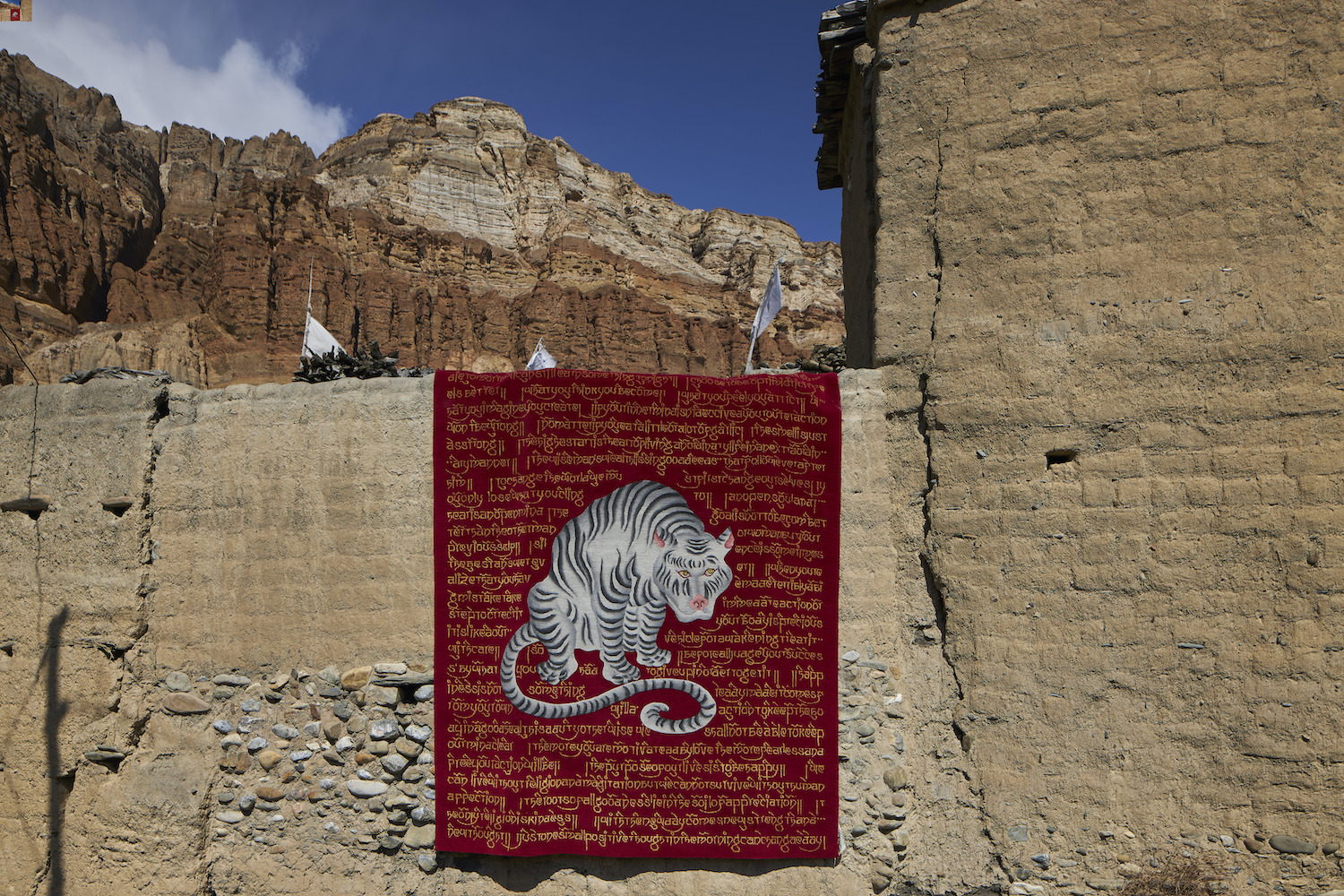
Backgrounding the tiger, what looks like traditional Tibetan script is actually a group of sage Buddhist sayings written in Roman script but delineated in a way to fool the eyes of all but the closest observers, designed by the artist to give depth to the carpet both literally and figuratively.
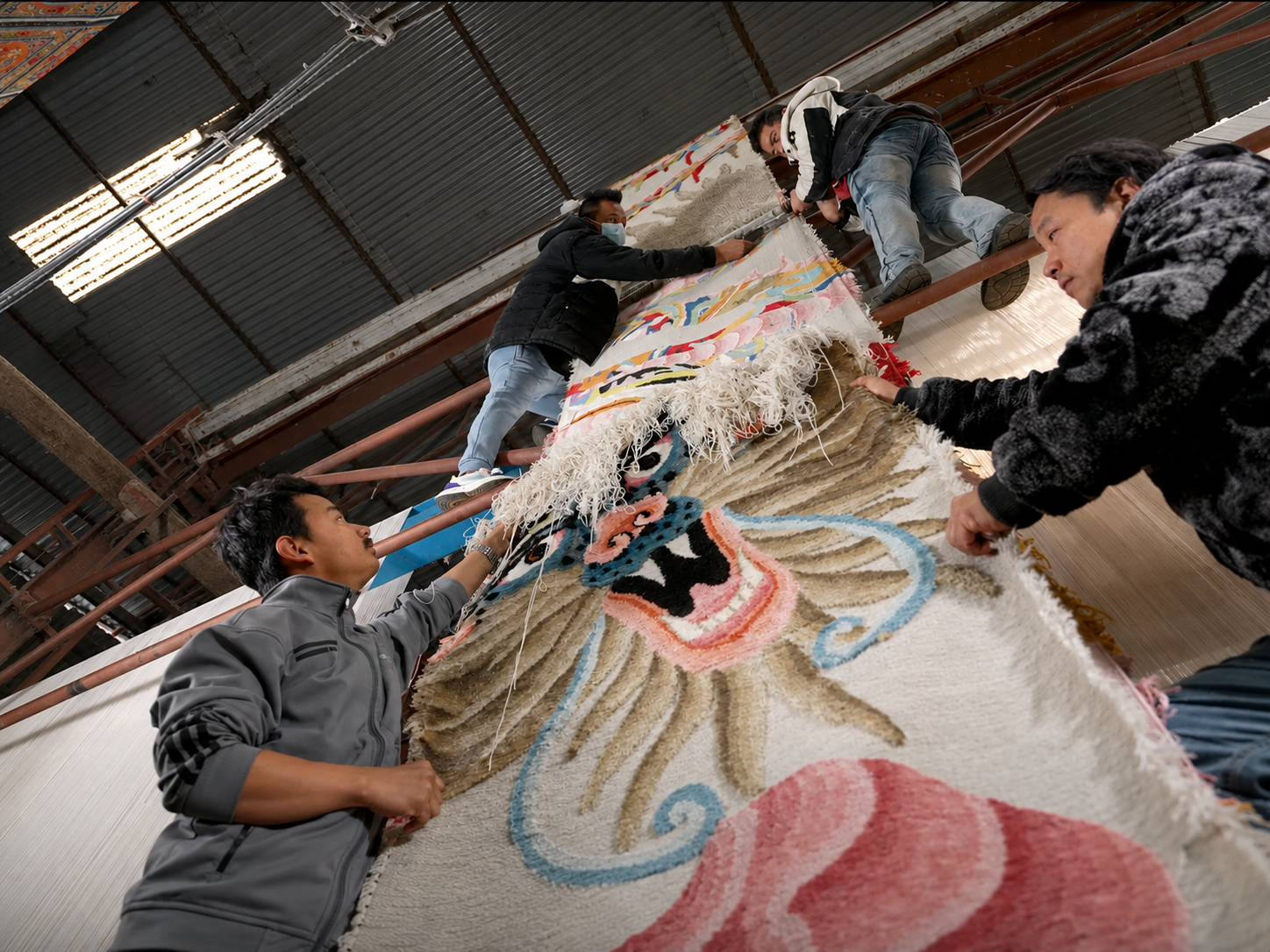
Stairway to Heaven (2024) is a long, upward ascending carpet made for the Year of the Dragon, again using cues and styles from traditional Tibet carpet motifs to symbolise the waxing and waning of the carpet industry. At several points, the dragon’s body is completely sliced off the carpet edges mirroring the dismantling of the carpet industry in Nepal.
The gap between art and craft, between artist and artisan, between designer and maker, all start to close and overlap at an exhibition like this. Carpets become artforms displayed on walls, in museums, galleries and homes. The carpet designer and maker both become the artist, working closely together on design and form. This is the intent of the curator, artists and makers: to begin showcasing craft as fine art.
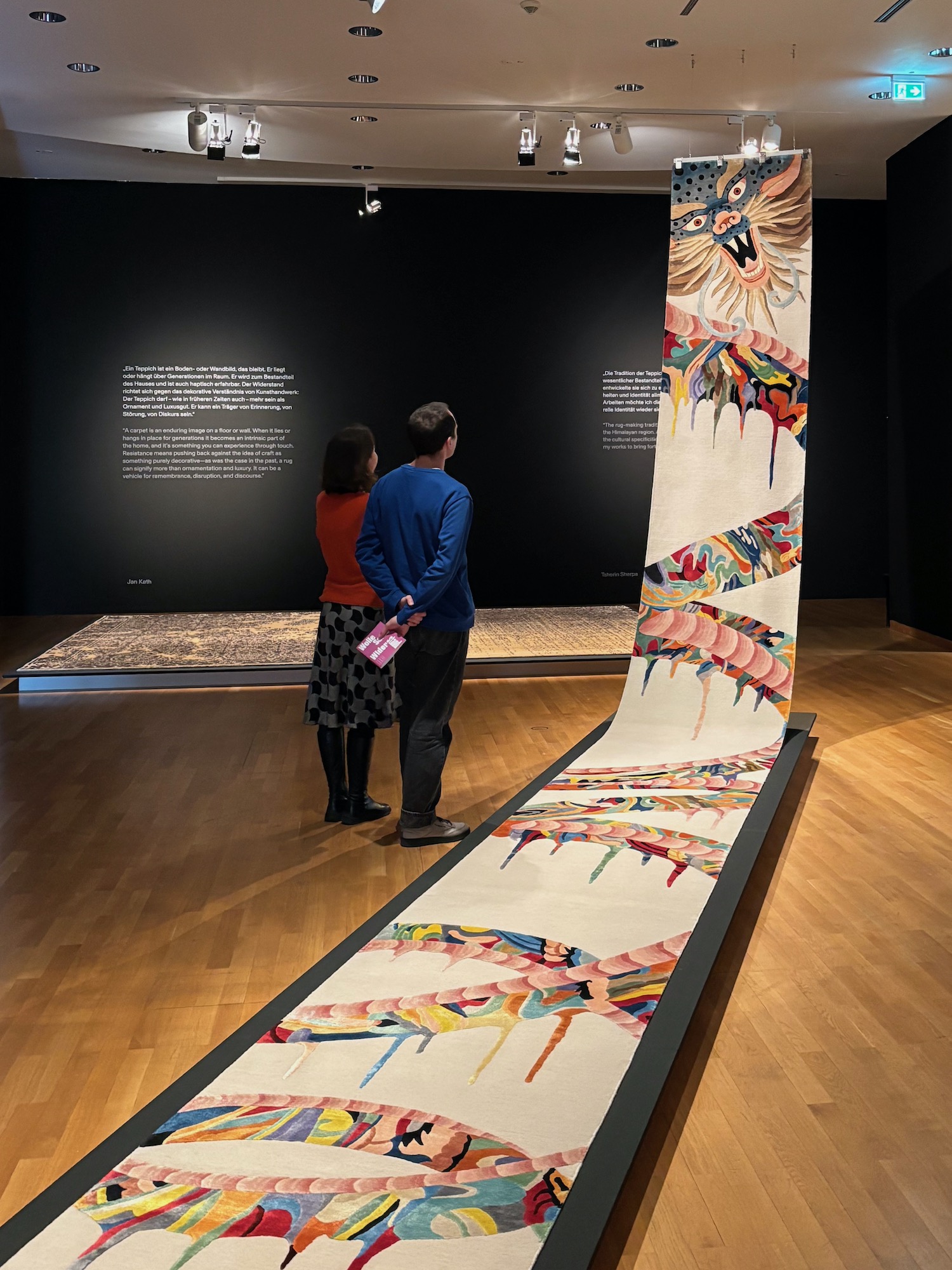
Wool.Silk.Resistance
Museum Angewandte Kunst, Frankfurt
Till 15 June
Sophia L Pandé is Founding Director of The Kalā Salon, a non-profit space for the arts.
[ad_2]
Source link